


Why Rig Type Changes Everything About Hot Water Performance
A Class B camper van and a 40-foot fifth wheel can both run tankless water heaters, but the specs that actually matter for each rig are fundamentally different. Picking the wrong unit leads to cold showers, wasted propane, or both.
Here's the core problem: 36% of current RV owners are first-time buyers, according to the 2025 RVIA/Ipsos Go RVing Demographic Profile. Many don't yet know how to evaluate water heater performance based on their specific rig type, and the gap between these two rigs is enormous.
Class B vans built on Transit or Sprinter platforms typically measure 17 to 24 feet and weigh 6,000 to 9,000 lbs. Fifth wheels range from 25 to 45 feet and tip the scales at 10,000 to 20,000 lbs. That's not a minor difference. It's a different category of vehicle with different plumbing, different payload budgets, and different hot water demands.
This guide breaks down four evaluation axes: physical fit, flow rate and BTU demand, propane efficiency, and real-world constraints like altitude, inlet temperature, and activation pressure. With 8.1 million American households owning RVs, 486,000 full-timers, and both Class B and fifth wheel shipments growing 3.3% year-over-year in 2025, these two audiences deserve distinct guidance.
Physical Constraints: Space, Weight, and Installation Reality
Space is the first filter, and it's a hard one. Class B vans built on Ford Transit or Mercedes-Benz Sprinter platforms have exterior bay space of roughly 18 inches or less. That hard limit rules out full-size units before you even look at BTU ratings.
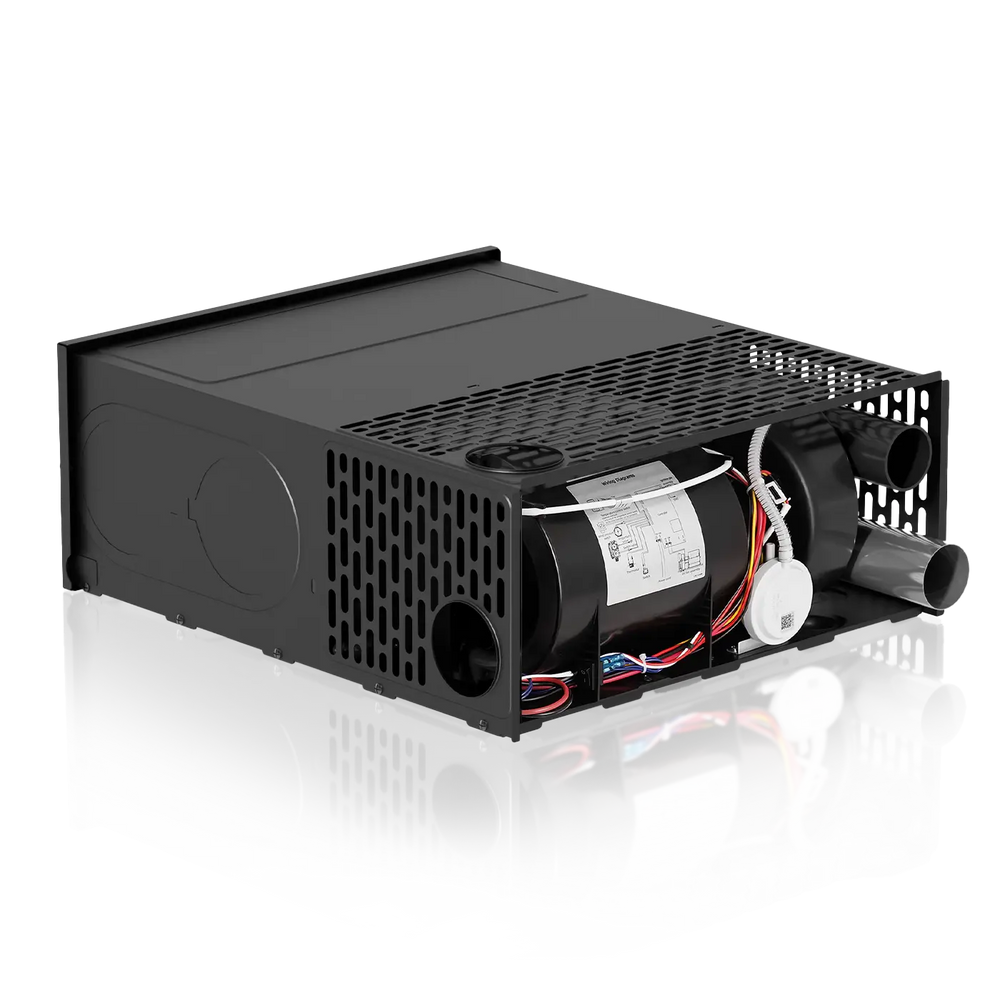
This is where compact tankless units prove their worth. Most measure approximately 12" x 8" x 4" and weigh 10 to 15 lbs, compared to a standard 6- to 10-gallon tank heater at 40 to 60 lbs and 2 to 3 cubic feet of cargo space. That's roughly 75% lighter and 80% smaller. For a van where every pound and every inch is a premium resource, the difference is decisive.
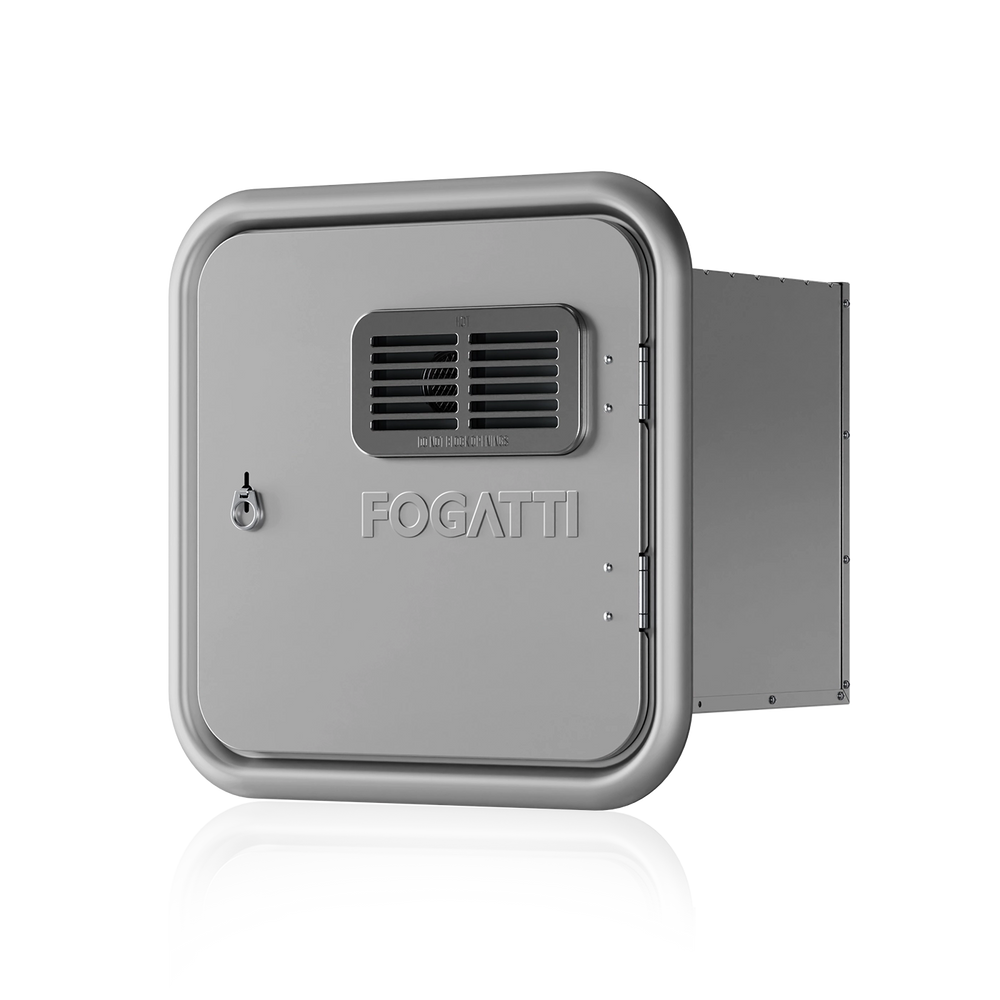
Installation approaches differ sharply between rig types. Class B vans often require exterior-mount portable solutions or custom bay retrofits. Fifth wheels typically come with a dedicated 10"x10" or 15"x15" exterior bay designed for drop-in replacement. Upgrading a fifth wheel from a tank heater to tankless is usually straightforward. In a van, it's a project.
Fifth wheels also have the payload capacity and bay space to accommodate higher-BTU units without compromise. A van owner has to make trade-offs: more BTU means more weight, more space, and potentially more propane draw from a smaller tank.
One more van-specific constraint that gets overlooked is grey tank capacity. A tankless unit delivers unlimited hot water, which sounds great until you realize a Class B's grey tank might hold only 20 to 30 gallons. You can overflow it faster than you'd expect. A fifth wheel's 50 to 80 gallon grey tank gives you much more runway. Van owners need to think about flow rate control as much as flow rate capacity.
BTU and GPM: Sizing the Right Unit for Your Rig
BTU output and GPM flow rate are directly linked, and understanding the math helps you avoid buying too much or too little heater. A 42,000 BTU unit delivers approximately 1.5 GPM at a 55°F temperature rise. A 66,000 BTU unit delivers roughly 3.0 GPM at the same rise. That temperature rise figure is the gap between your cold inlet water and your desired output temperature.
For Class B vans with solo travelers or couples, 1.5 to 2.0 GPM and 48,000 to 55,000 BTU is the sweet spot. Anything beyond that is wasted capacity and unnecessary propane draw. You're not running two showers simultaneously in a 19-foot van.
A 40-foot fifth wheel tells a different story. Multiple bathrooms, a full kitchen, and back-to-back shower users can demand 2.0 to 3.6+ GPM and up to 66,000 BTU to support simultaneous hot water draws. Under-sizing here means lukewarm water for the second person in line.
Translate those specs into real-world scenarios. A couple in a van in Montana in January is dealing with inlet water temperatures around 38 to 40°F. At that temperature, effective flow rate drops significantly because the heater has to work harder to achieve the same output temperature. Cold inlet water can roughly double the effective flow rate reduction. That 2.0 GPM rating on the box might deliver closer to 1.0 GPM of comfortably hot water in freezing conditions.
A family in a fifth wheel parked in Arizona in March faces a much easier equation. Inlet water might be 60 to 65°F, meaning the heater needs a smaller temperature rise and can deliver closer to its rated GPM.
One more point worth addressing: why not electric tankless? The math kills it. Delivering 40,000+ BTU via electricity would require approximately 75 amps of 120V AC power. Most RVs run on 30- or 50-amp service. As Camping World notes, that's far beyond what any standard RV electrical system can handle. Propane dominates for good reason, and gas-fired tankless heaters account for roughly 66% of the global tankless market as of 2026.
The Activation Threshold Problem in Class B Vans
Here's a fact most buying guides skip: tankless water heaters ignite only when water flow crosses a minimum threshold, typically 0.5 to 0.7 GPM. If flow drops below that threshold, the burner shuts off mid-shower, without warning.
This is a Class B van problem more than any other rig type. Water-saving showerheads, common in vans to conserve small fresh water tanks, can fall below that activation threshold. The result is a frustrating cycle of hot-cold-hot water that defeats the purpose of going tankless in the first place.
Before purchasing a tankless unit for your van, verify your showerhead's flow rate against the heater's minimum ignition spec. This is a non-negotiable compatibility check. If your showerhead puts out 0.4 GPM and your heater needs 0.5 GPM to fire, you'll need a different showerhead or a different heater.
Low-PSI pump systems in Class B vans compound the issue. Gravity-fed setups or small onboard pumps may not generate enough pressure to trigger ignition reliably. Look for units rated to ignite at as low as 3 PSI water pressure. Fifth wheel owners are generally less affected here thanks to larger fresh water tanks and higher-capacity pump systems, though long pipe runs introduce their own set of challenges.
The Cold-Water Sandwich and Long Pipe Runs in Fifth Wheels
If you've ever experienced a burst of cold water mid-shower right after the hot water seemed to stabilize, you've met the "cold-water sandwich." It's caused by residual cold water sitting in the pipe runs between the heater and the showerhead. When the heater fires up for a second draw, that cold slug of water hits you before the fresh hot water arrives.
This is a fifth wheel-specific pain point. The distance between the exterior heater bay and interior bathrooms in a 40-foot rig can be significant. In a compact Class B van, pipe runs are short enough that this effect is rarely noticeable.
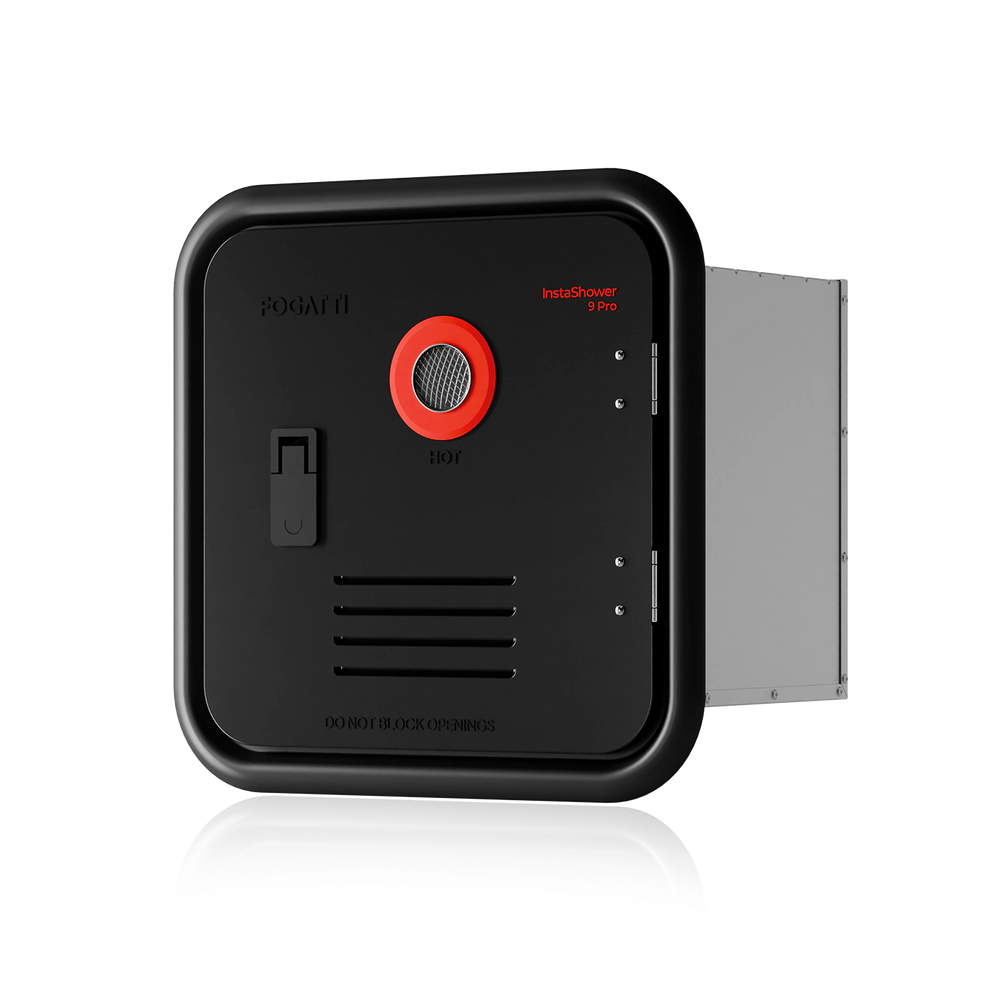
Mixing-tank technology solves this problem. The Fogatti InstaShower 9 Pro, for example, delivers 66,000 BTU and 3.6 GPM with a built-in mixing tank that blends hot and cold water before delivery. This eliminates the cold-water sandwich effect, making it especially valuable for back-to-back shower scenarios in large rigs where multiple family members are showering in sequence.
For the approximately 486,000 Americans living full-time in RVs, many of them in fifth wheels, this isn't an occasional annoyance. It's a daily quality-of-life issue. Full-timers should prioritize units with mixing-tank or buffer technology. Smart controls and remote temperature adjustment are also emerging as meaningful differentiators for fifth wheel owners who may have a long walk from the heater bay to the master bathroom.
Propane Efficiency and Tank Capacity: The Math That Matters
Propane consumption is where the rubber meets the road for boondockers and off-grid campers. A 65,000 BTU propane tankless heater at full output consumes approximately 1.5 lbs of propane per hour. That number is the same regardless of rig type, but the implications are very different.
A Class B van typically runs on a single 20 lb propane tank. At 1.5 lbs per hour of full-output hot water use, that's roughly 13 hours of total hot water before you're empty (accounting for some propane reserved for cooking and heating). A fifth wheel may carry 30 to 40 lb tanks, giving significantly more range, but the same draw rate still demands planning for multi-day off-grid stays.
It's worth understanding how tankless compares to tank heaters on propane use. Tankless units draw 42,000 to 66,000 BTU continuously while water is running. A traditional 6-gallon tank heater uses only about 12,000 BTU per hour to maintain standby temperature. For light, intermittent use, a tank heater can actually be more propane-efficient. For heavy use, especially in a fifth wheel with multiple users, tankless wins because it never runs out of hot water and doesn't waste propane keeping a tank warm when nobody's using it.
The broader market confirms propane's dominance. Gas-fired tankless heaters represent the majority of the global tankless market, and North America holds an estimated 35.9% share of that market, projected to record the fastest growth through 2033.
Practical advice: boondocking van dwellers relying on small tanks should choose lower-BTU units and pair them with low-flow fixtures to extend propane range. Fifth wheel owners with larger tanks have more flexibility but should still calculate their expected daily hot water usage against tank capacity before heading off-grid for a week.
Altitude Performance: The 10% Rule and What It Means for Your Rig
If you camp in the Rockies, the Sierra Nevada, or any mountain destination above 5,000 feet, altitude performance is a factor you can't ignore. The combustion science is straightforward: propane output drops approximately 10% for every 1,000 feet of elevation gain due to reduced oxygen density in thinner air.
This hits high-BTU units hardest. At 7,000 feet, a common elevation for mountain campgrounds across Colorado, Utah, and New Mexico, a 66,000 BTU fifth wheel unit effectively delivers closer to 45,000 BTU. That could drop below the threshold for comfortable multi-user hot water, turning what should be a residential-feel shower into a lukewarm disappointment.
The problem compounds at cold temperatures. At high altitude above 6,000 feet, rapid propane draw can cause tanks to lose pressure, further reducing heater performance. This is more acute in fifth wheels running high-BTU units because they're pulling more propane per minute.
A Class B van doing overlanding at 10,000 feet in Colorado faces a different scenario. A lower-BTU unit loses less absolute output (10% of 50,000 BTU is 5,000 BTU, versus 10% of 66,000 BTU being 6,600 BTU). But cold inlet water at altitude, often 38 to 40°F from mountain sources, still reduces effective GPM. You're getting squeezed from both sides.
The practical guidance: fifth wheel owners who regularly camp above 5,000 feet should size up by one BTU tier from what they'd otherwise need. If your usage pattern calls for 55,000 BTU at sea level, go with 66,000 BTU for mountain camping. Class B van owners should prioritize units with altitude-compensation features or simply accept reduced flow rate at elevation and adjust shower habits accordingly. A slightly shorter shower at 9,000 feet is a reasonable trade-off for the views.
Choosing the Right Unit: A Rig-Specific Decision Framework
Here's a clear side-by-side framework to guide your decision:
Class B Van Owners:
- Compact footprint: 12" wide or less
- Weight under 15 lbs
- 48,000 to 55,000 BTU
- 1.5 to 2.0 GPM
- Low ignition pressure: 3 PSI or lower
- Verify showerhead flow rate exceeds minimum activation threshold
Fifth Wheel Owners:
- 60,000 to 66,000 BTU
- 3.0 to 3.6+ GPM
- Mixing-tank or buffer technology for cold-water sandwich prevention
- Smart temperature controls for long pipe runs
- Size up one BTU tier if you camp above 5,000 feet regularly
On price, models in the $350 to $500 range deliver 4 to 6 times longer lifespan than budget alternatives. For full-timers especially, that long-term value calculation matters more than the upfront savings on a cheaper unit.
If you're not sure which specs match your specific rig, Fogatti's interactive Help Me Choose advisor tool walks you through your rig type, usage pattern, and propane setup to recommend the right unit. It takes the guesswork out of a decision with a lot of variables.
One more thing worth knowing: Fogatti is a trusted OEM supplier to leading RV manufacturers including Forest River and Gulf Stream. The same engineering that goes into factory-installed units on new rigs is available to anyone upgrading an existing setup, backed by a 2-year warranty and free shipping.
The Bottom Line: Match the Heater to the Rig, Not the Other Way Around
There is no universal "best" RV tankless water heater. Performance is always relative to your rig type, your usage pattern, your typical camping altitude, and your propane capacity. A unit that's perfect for a solo van-lifer in the desert will leave a family of four in a fifth wheel shivering.
The two personas are clear. The van-life traveler needs lightweight construction, low activation pressure, and efficient propane use from a small tank. The full-time fifth wheel resident needs residential-feel hot water with cold-water sandwich protection, high GPM, and enough BTU headroom for mountain camping.
The global RV water heater market is projected to reach $700 million by 2035. More options are coming to market every year, which makes rig-specific evaluation skills more valuable, not less. Use the framework in this guide as a checklist before your next purchase.
Fogatti's product ecosystem covers both ends of the spectrum, from compact van-friendly units to the InstaShower 9 Pro for large fifth wheels, all backed by the experience of serving 800,000+ customers across 80+ countries. Explore the lineup and find the unit engineered for your specific rig.
If you've already made the switch to tankless, share your rig-specific hot water setup, your workarounds, and your real-world results with the Fogatti community. The best advice often comes from someone who's already parked where you're headed.
Sources
- RV Statistics: 15 Verified Numbers and 5 Myths — Restful RV (citing RVIA 2025 data)
- Best Tankless Water Heaters for RVs & Camping — Tankless Geek
- RV Tankless Water Heaters: GPM, BTU, and Real-World Performance Compared — Camp Addict
- Best RV Tankless Hot Water Heaters: Complete Buying Guide — The Examiner News
- Choosing a Tankless RV Water Heater — Camping World Blog
- Tankless Water Heater Market Size & Opportunities — Coherent Market Insights
- Tankless Water Heater Market Size Report, 2026–2033 — Grand View Research
- 8 Best Point of Use Water Heaters for RVs — Requiem for a Dream
- Best RV Tankless Water Heater of 2026 — RV Trekkers
- On Demand Water Heaters and Altitude — My Grand RV Forums
- RV Water Heater Market Size, Share and Forecast 2035 — Market Research Intellect