


You Upgraded to Tankless. Now You Want Your Tank Back.
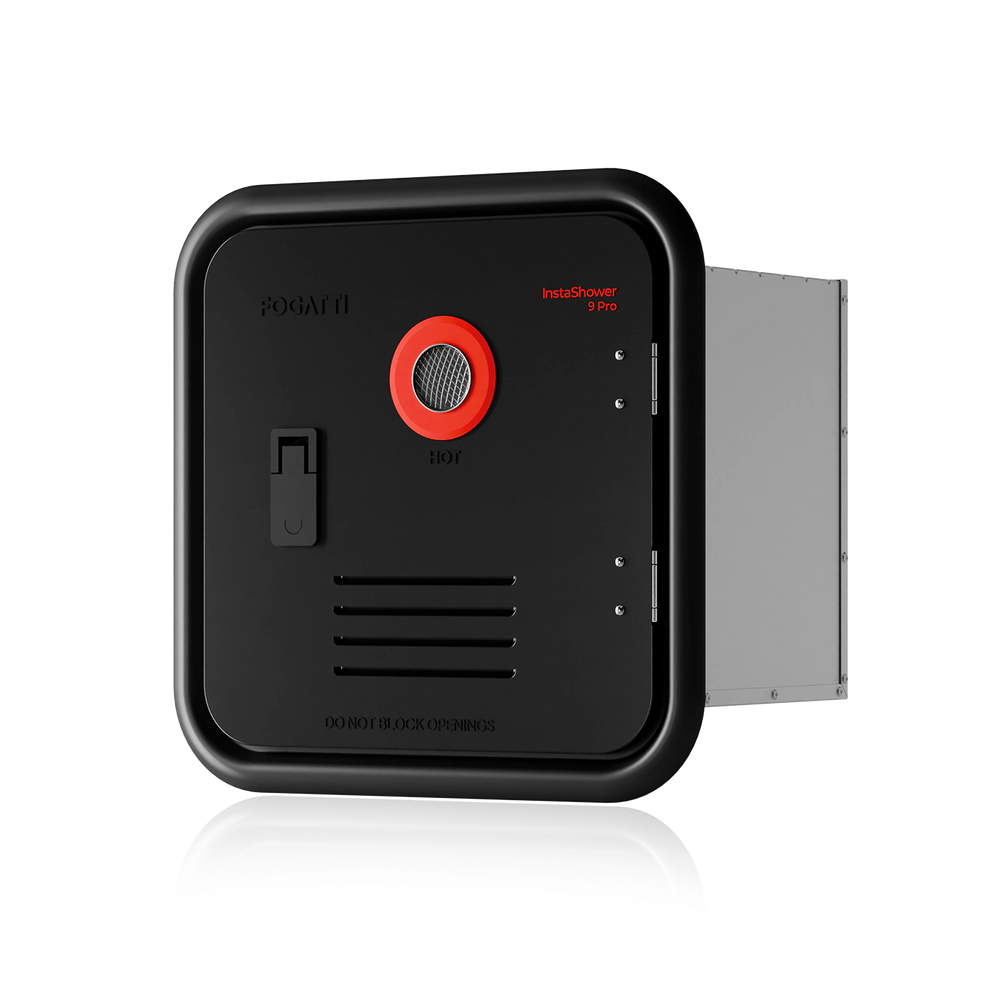
Here's a trend nobody saw coming: RVers who specifically sought out, or happily accepted, factory-installed tankless water heaters are now asking how to swap them back out. If you've spent any time on Forest River Forums, Keystone Forums, Grand Design Owners groups, or the Escapees Discussion Forum in 2025 or 2026, you've seen the threads. Error codes. Cold-water slugs mid-shower. Gray tanks filling up twice as fast as expected.
If you're dealing with any of that, you're not doing something wrong. These are well-documented, real-world complaints from experienced RVers.
Context matters. RV ownership now spans 8.1 million U.S. households, and according to The Dyrt's 2026 Camping Report, 59.8% of campers went free or dispersed camping in 2025. Water conservation isn't a niche concern for a handful of off-gridders. It's a mainstream reality.
This article isn't another generic pros-and-cons list. It's a decision framework built around how you actually camp. We'll walk through four camper archetypes (weekend hookup camper, frequent boondocker, full-timer, and cold-weather camper) so you can figure out which water heating system genuinely fits your life on the road.
Why Tankless RV Water Heaters Fail Boondockers Specifically
The core issue is mechanical, not a matter of user preference. Most RV tankless water heaters require a minimum flow rate of 0.8 to 1.0 GPM to activate the burner. Drop below that threshold, even slightly, and the unit shuts off. What follows is a slug of cold water through the line. According to DoItYourselfRV, this minimum-flow requirement makes tankless units fundamentally incompatible with the low-flow water conservation practices common in boondocking.
The navy shower is the single most effective water-saving technique for off-grid RVers. You wet down, turn off the water, soap up, then turn the water back on to rinse. Simple. Effective. And completely broken by tankless technology. When you shut off the flow, the burner dies. When you turn the water back on, you get cold water first while the unit re-fires and the heat exchanger catches up. That cold-water penalty defeats the entire purpose of the navy shower.
Then there's the gray tank math. Because you can't pause a tankless shower without paying that cold restart penalty, most users end up running water continuously. The result: RVers on Keystone Forums report needing to dump gray tanks every 2 to 3 days instead of stretching them further. When you're boondocking miles from the nearest dump station, that's not a minor inconvenience. It's a trip-altering problem.
Cold weather adds another layer of difficulty. Tankless heat exchangers are mounted in the exterior compartment, exposed to ambient air temperatures. RV Travel documented RVers who had to trickle water overnight to prevent freezing in their tankless units. Running water all night is wasteful under any circumstances, but when you're boondocking with a finite fresh water supply, it's a non-starter.
There's also the cold-inlet-temperature problem. Very cold incoming groundwater simply can't be raised to a comfortable shower temperature in the brief time it passes through a tankless heat exchanger. A tank heater, by contrast, maintains a full 6 to 10 gallon reserve pre-heated to 125 to 130°F regardless of how cold the water comes in. That stored hot water is ready when you are, no matter the outside temperature.
These aren't edge cases. The Dyrt's 2026 Camping Report found that 79.1% of free campers in 2025 went dispersed or boondocking. That's the majority of the off-grid camping population running into these exact limitations.
The Propane Efficiency Claim: What RV Forums Are Actually Saying
You've probably seen the marketing claim: tankless water heaters use 30 to 50% less propane than tank units by eliminating standby heat loss. The RV Surplus cites this figure in their comparison guide, and it's repeated across manufacturer spec sheets and retailer websites.
The problem is that this number comes from residential use patterns, where a tank water heater sits in a basement maintaining temperature 24 hours a day, burning fuel to keep 40 to 80 gallons hot even when nobody's home. In that scenario, eliminating standby loss is a genuine win.
RV use is different. Most RV owners switch their water heater off between uses. You flip the switch before your shower, wait for the tank to heat, shower, and turn it off. Standby loss in that pattern is minimal. The efficiency gap that justifies tankless in a house narrows considerably in an RV.
Meanwhile, tankless units use a significantly larger burner flame to heat water on demand. Because the water spends less time in contact with the heat exchanger, propane consumption per gallon of delivered hot water can be similar to, or even higher than, a tank unit in actual RV use. Escapees forum members have documented this in detail, noting that their propane usage didn't drop after switching to tankless.
Tank heaters also hold a card that most tankless RV units can't play: dual-fuel operation. A standard 6 or 10 gallon RV tank water heater can run on both propane and 120V electric shore power. When you're at a campground with hookups, you can heat water at zero propane cost. Most RV tankless units are propane-only, as noted by IRV2 Forums, so that free-heating option simply doesn't exist.
For reference, a 20 lb propane tank provides roughly 40 to 50 showers with a portable tankless unit, according to TanklessGeek. Cold groundwater and higher temperature settings increase consumption, and those are exactly the conditions many campers face in real-world use.
To be fair, there is a legitimate efficiency case for tankless: if you stay at full-hookup sites, shower frequently, and leave the heater running continuously, tankless does reduce propane use compared to a tank kept hot around the clock. The myth-busting here applies specifically to intermittent, conservation-minded use, which describes the majority of boondocking RVers.
When Tankless Still Wins: Honest Scenarios Where It Makes Sense
Tankless isn't a bad technology. It's a technology built for specific use cases, and when those use cases align with your camping style, it genuinely delivers.
Full-hookup weekend campers: If you primarily stay at campgrounds with electric hookups and shower without water restrictions, tankless delivers genuinely unlimited hot water with no tank-recovery wait. You never run out mid-shower. That's a real lifestyle upgrade, especially after a long day on the trail or at the lake.
Larger RV households: Families or groups cycling through multiple back-to-back showers benefit from tankless because a 6-gallon tank runs out after roughly two showers and requires 20 to 30 minutes to recover. If four people need to shower before dinner, tankless eliminates the waiting game.
Weight-sensitive builds: A 6-gallon tank full of water weighs approximately 50 lbs. A 10-gallon tank weighs approximately 83 lbs. For van conversions and lightweight travel trailers where every pound affects towing dynamics and fuel economy, tankless offers a meaningful weight reduction.
Warm-climate campers: RVers who camp exclusively in mild or warm climates avoid the freeze risk and cold-inlet-temperature problems entirely. When incoming water is already 60°F or warmer, tankless units perform exactly as advertised.
Stationary or part-time RVers: Those who use their RV as a seasonal base camp with consistent utility hookups get the most from tankless efficiency without the boondocking constraints. In this scenario, the unit operates much like a residential tankless heater, and the efficiency claims hold up.
The Real Cost of Switching Back — and the Workaround Alternative
If you've decided a tank water heater is the right move, here's the good news: the reverse swap is often more straightforward than the original tankless retrofit. Tank heaters use existing propane and water hookups, and many RV models have cutout dimensions that accommodate standard 6 or 10 gallon units without major modification. Lippert's replacement guide confirms that traditional tank-style units remain widely compatible across RV platforms.
Compare that to the original tankless retrofit, which often required new venting, different cutout dimensions, and rewiring. Going back in the other direction avoids most of that complexity and cost.
Before you commit, consider the workaround option. A Shower Miser or similar recirculation device recirculates cold water back to the fresh tank until hot water arrives at the showerhead, reducing the waste problem that plagues tankless boondockers. It's a real solution, but professional installation can run up to $1,200, as discussed on IRV2 Forums. That's a significant expense on top of the tankless unit you already own.
Frame it this way: if a Shower Miser install costs $1,200 and a tank water heater swap costs less, the economics may favor switching back, especially for boondockers who'll benefit from dual-fuel capability and navy shower compatibility. Get quotes for both before deciding.
There's also the long-term service angle. Tank heaters are widely available, with straightforward replacement parts and a large installer network. Newer tankless models sometimes come with proprietary error codes and limited service options, which can create friction when something goes wrong 200 miles from the nearest RV dealer. With over 20 years of engineering RV appliances and OEM partnerships with brands like Forest River and Gulf Stream, we've seen firsthand how serviceability affects real-world owner satisfaction.
Which System Fits Your Camping Style? A Decision Framework
Rather than debating specs, match the system to how you actually spend your nights.
Weekend hookup camper (30 to 50 nights per year, full hookups): Tankless is likely the better fit. Unlimited hot water, no propane cost when running on electric, and minimal freeze risk if you camp in mild seasons.
Frequent boondocker (significant nights off-grid, water conservation critical): Tank heater is likely the better fit. Navy showers work as intended. Gray tanks fill slower. Freeze risk is lower. And the dual-fuel option saves propane when you do visit hookup sites.
Full-timer with mixed camping: The answer depends on climate and hookup frequency. Cold-weather full-timers and those who boondock more than 40% of their nights tend to lean toward tank heaters. Warm-climate full-timers with frequent hookup access lean toward tankless.
Cold-weather and four-season camper: Tank heater is strongly preferred. A pre-heated reserve of water, no freeze risk from an exposed heat exchanger, and no cold-inlet-temperature output limitation make it the clear choice for winter camping.
If you're still not sure where you fall, Fogatti's Help Me Choose advisor tool walks you through a few quick questions about your RV type, camping habits, and climate to give you a personalized recommendation. It's built on feedback from over 800,000 customers and designed to help you find the right answer, not just the most expensive one.
The RV water heater market is evolving. Hybrid and solar-assisted options are emerging, and the RV water heater market (valued at approximately $373 million in 2025) continues to grow. For the decision you need to make right now, though, your camping style is the most reliable guide.
The Bottom Line: It's Not About the Technology. It's About How You Camp.
The tankless vs. tank debate is really a full-hookup camper vs. boondocker debate. The technology is secondary to the use case. Once you frame it that way, the right answer usually becomes obvious.
If your factory-installed tankless unit is creating real operational friction (gray tank overflow, cold-water slugs, freeze anxiety), switching back to a tank is a legitimate, practical solution. It's not a step backward. It's a correction that aligns your equipment with your actual camping life.
Tankless technology is genuinely improving and may close these gaps over time. But you camp now, not in some future product cycle. Decisions need to be based on current real-world performance.
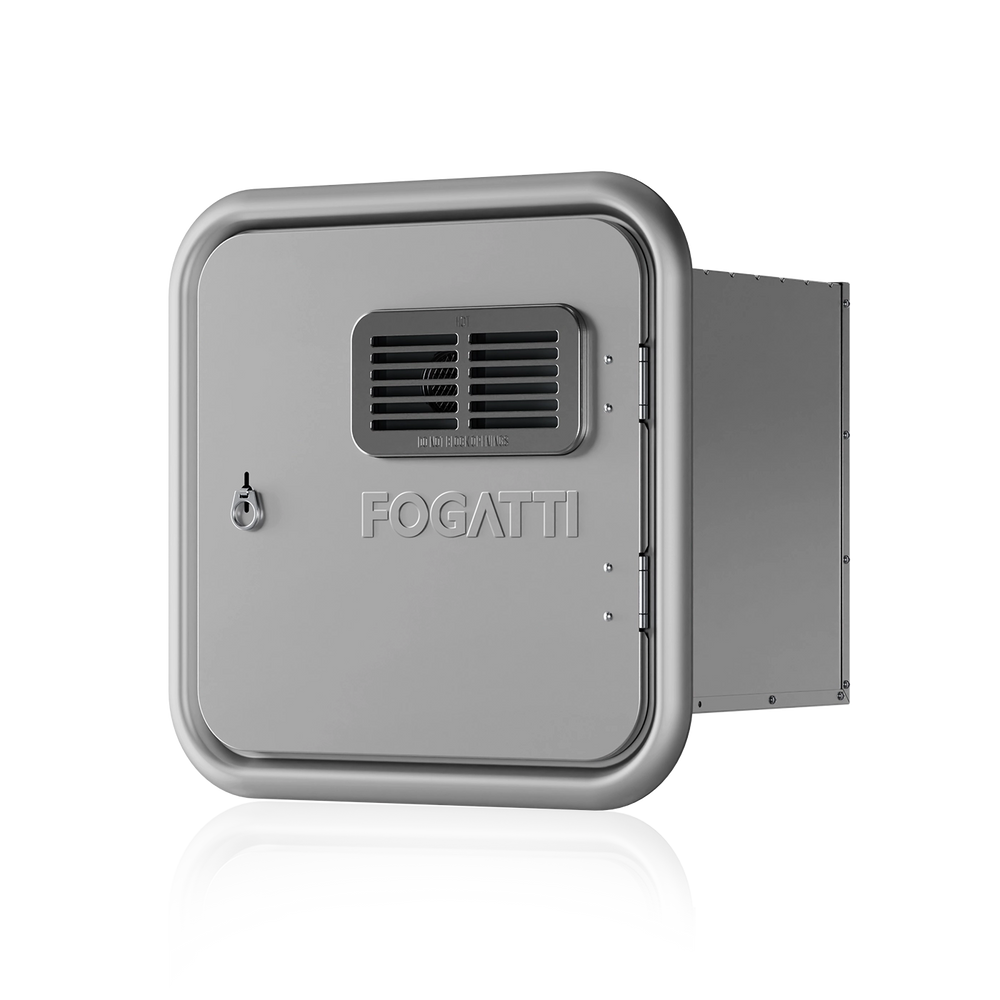
Thousands of RV owners have navigated this exact decision. At Fogatti, we've been engineering RV appliances since 2003, and we've learned that the right answer is always the one that makes your time on the road more comfortable and less stressful. Explore our full range of RV water heaters, or use our Help Me Choose tool to find the solution that fits your specific rig and camping style.
Sources
- Forest River Forums – Swapping RV Tankless Water Heater for Tank Model
- Keystone Forums – Converting a 26RKE From Tankless to Tank Water Heater
- Escapees Discussion Forum – Replacing Tankless Water Heater with a Tank Style
- DoItYourselfRV – Should You Upgrade to an RV Tankless Water Heater?
- RV Travel – One RVer's Unflattering Opinion of a Tankless Water Heater
- The RV Surplus – Tankless vs Tank RV Water Heater Complete Comparison Guide
- IRV2 Forums – On-Demand RV Water Heaters for Low Pressure and Winter Camping
- TanklessGeek – Best Tankless Water Heaters for RVs & Camping 2026
- Lippert – A Comprehensive Guide to RV Water Heater Replacement
- RVIA Market Pulse Dashboard – RV Industry Association
- CamperChamp – Global Camping Statistics and Trends 2026 (citing The Dyrt 2026 Camping Report)
- Market Research Intellect – RV Water Heater Market