


Shore Power Spoils Your Water Heater — Here's What Changes Off-Grid
Your tankless water heater isn't broken. Your boondocking system is working against it.
At a campground with shore power, everything cooperates. City water delivers a steady 40–80 PSI, your converter keeps the batteries topped off, and propane flows without a second thought. The heater fires instantly, and hot showers feel like home.
Unhook from all of that, and three critical variables start degrading at the same time: water pressure and flow (now dependent on your onboard 12V pump), propane supply (now subject to regulator quirks, temperature, and tank level), and battery power (now draining with every appliance you run). These three systems are interdependent. A dip in one affects the others, and your tankless heater sits right at the intersection.
This matters more now than ever. Dispersed camping spots are filling 30% faster than pre-pandemic levels, and 61% of new RV owners are under 54, many of them discovering off-grid limitations for the first time. The boondocking boom is real, and so are the frustrated forum posts about heaters that "randomly" stop working.
This article breaks down each failure mode clearly and ends with a five-point pre-shower checklist you can use at every dispersed site.
Flow, Not Pressure: How Your Tankless Heater Actually Decides to Fire
The most common misconception about RV tankless water heaters: they are flow-activated, not pressure-activated. Pressure matters, but only because it drives water through the heater's flow sensor at a sufficient rate. The sensor doesn't measure PSI. It measures gallons per minute.
Most RV tankless units require a minimum incoming water pressure of 20–45 PSI to generate enough flow to trip the activation threshold. Drop below that range, and the burner simply won't fire. No error code, no warning. Just cold water.
When flow dips below the threshold mid-shower, the burner shuts off. Cold water sitting in the heat exchanger then reaches the showerhead before the unit can re-ignite. This is the "cold water sandwich" effect, and it's far more common on a pulsing onboard pump than on steady city water. According to discussions on Forest River Forums, boondockers rank this among their top frustrations with tankless setups.
RV showerheads typically flow between 1.5 and 1.8 GPM to conserve water. A properly matched tankless unit needs at least that flow rate, plus roughly a 0.2 GPM buffer, to stay activated reliably. If your showerhead restricts flow too aggressively, or your pump can't maintain consistent output, the heater will cycle on and off unpredictably.
Understanding this distinction is the first step toward diagnosing most boondocking hot water problems. The heater isn't malfunctioning. It's responding exactly as designed to insufficient flow.
The Pulsing Pump Problem: Why Your Onboard 12V Pump Creates Activation Gaps
A typical RV onboard water pump, like the Shurflo 2088, doesn't deliver water at constant pressure. It cycles. The pump kicks on when pressure drops to around 45 PSI and shuts off when it hits roughly 65 PSI. That creates a 15–20 PSI pressure swing between each cycle.
On city water, your heater sees a rock-steady 40–80 PSI with zero cycling. The flow sensor stays tripped, the burner stays lit, and hot water is continuous. That's why the same heater that works flawlessly at a campground sputters and fails at a dispersed site. The hardware hasn't changed. The water delivery has.
Each time the pump cycles off, pressure drops. Flow through the heater's sensor dips. If it crosses below the activation threshold, even briefly, the burner cuts out. Then the pump kicks back on, pressure climbs, flow resumes, and the burner re-ignites — but not before a slug of cold water from the heat exchanger reaches your showerhead. Repeat this every 10–15 seconds and you get what feels like a randomly malfunctioning heater. It's not random. It's your pump's duty cycle.
Now add the navy shower technique to this equation. Turning the tap off to conserve water is standard boondocking practice, but it's structurally incompatible with most tankless designs. Every time you shut the tap and reopen it, the heater must re-ignite from scratch, purging cold water from the heat exchanger each time. As noted by PrkEd, this can actually waste the very water the technique was meant to save.
A practical workaround: instead of cycling the tap on and off, keep it at a consistent low-flow trickle that stays above your heater's activation threshold. Pair this with a low-flow showerhead matched to the heater's minimum activation range. You'll use slightly more water per minute, but you'll waste far less overall by eliminating cold-water purge cycles.
Propane Supply Under Pressure: Regulators, BTU Stacking, and Cold Weather
Your RV's propane system isn't a simple tank-to-burner pipeline. It runs through a two-stage regulator factory-set to deliver approximately 11 inches of water column (about 0.4 PSI) to your appliances. That's a fixed, low-pressure delivery system, and it has limits that boondockers hit more often than they realize.
Consider BTU demand stacking. A tankless water heater draws between 30,000 and 66,000 BTU/hr, depending on the model. Run it simultaneously with your furnace and stove, and total demand can climb toward 100,000 BTU/hr. Most RV two-stage regulators are rated for 160,000–200,000 BTU/hr, so you're not exceeding capacity on paper. In practice, simultaneous high draws cause momentary pressure dips at the regulator outlet that are enough to disrupt a tankless burner's flame.
Then there's the fail-closed regulator trap. If you open your propane tank valve too quickly, the regulator's excess-flow valve detects a sudden pressure surge and shuts off gas flow entirely. The result looks identical to an empty tank or a faulty heater. It's a 30-second fix that most boondockers never learn about. (More on that below.)
Cold weather compounds everything. Low ambient temperatures reduce propane tank vapor pressure while simultaneously increasing the temperature rise your heater needs to deliver. A tank that performs fine at 70°F may struggle to supply adequate vapor pressure at 30°F, especially if it's below half full. As discussed on iRV2 Forums, winter boondockers in cold climates report this as a recurring issue.
Keeping propane tanks below 1/4 full drops vapor pressure too low to reliably fire a high-BTU burner. After a tank swap, air pockets trapped in the propane lines can block ignition entirely, because the small orifice in a tankless burner can't push through a pocket of air the way a larger furnace burner can.
Altitude adds one more variable. High-elevation boondocking in the Rockies or Sierra Nevada further reduces both propane vapor pressure and combustion efficiency. Camping above 7,000 feet in cold weather with a low tank means stacking three propane penalties at once.
The Excess-Flow Valve Reset: A 30-Second Fix Most Boondockers Never Know
This is the single most overlooked zero-cost fix in RV troubleshooting. If your tankless heater won't ignite and you've confirmed the tank isn't empty, try this before anything else:
- Close the propane tank valve completely.
- Wait 30 seconds for line pressure to equalize.
- Reopen the valve slowly and steadily, taking 3–4 full seconds to reach fully open.
Why this works: slow reopening prevents the excess-flow valve from detecting a sudden pressure surge. When you crank the valve open quickly, the valve interprets the rush of gas as a leak and trips to the closed position. It's a safety feature doing exactly what it's designed to do.
This fix resolves a failure mode that looks identical to an empty tank or a faulty heater. It saves unnecessary panic, wasted diagnostic time, and service calls that end with a technician doing exactly what you just read.
The Hidden Variable: 12V Battery Power and Ignition Failure
Your propane tankless water heater requires 12V DC power for ignition, the control board, and the solenoid gas valve. Even when propane supply and water flow are perfect, a weak battery bank will prevent the heater from firing.
On shore power, your converter keeps the batteries fully charged at all times, so 12V supply is never a concern. Boondocking on a partially depleted battery bank changes the equation entirely. As DoItYourselfRV explains, ignition failures caused by low voltage look exactly like propane or water problems: the heater clicks but doesn't ignite, or the control panel throws error codes that point you in the wrong direction.
The symptom is deceptive. You hear the igniter clicking, so you assume propane is the issue. Or you see the control board light up, so you assume power is fine. But the solenoid valve and igniter draw enough current that a battery bank sitting at 12.0V under load may not deliver sufficient voltage to complete the ignition sequence.
Practical guidance: before your first shower of the day, check battery voltage under load. You want to see 12.4V or higher. If you're running a lithium bank, check your battery management system for any low-voltage cutoff warnings. Prioritize solar or generator charging before firing high-BTU appliances during extended boondocking trips.
This is the core system-level message of this article: water pressure, propane supply, and 12V power all degrade together when you're off-grid. Diagnosing any one variable in isolation will lead you to the wrong conclusion. A heater that "randomly" fails is usually responding to a combination of marginal conditions across all three systems.
Mixing-Tank Designs vs. Standard Tankless: Which Handles Boondocking Better
Not all tankless water heaters respond to boondocking conditions the same way. The key differentiator is whether the unit includes a mixing tank (sometimes called a buffer tank).
A mixing-tank design stores a small volume of pre-heated water inside the unit. This buffer means the burner doesn't need to fire continuously to maintain hot water delivery. When your pump cycles and flow briefly dips below the activation threshold, the stored hot water covers the gap. No cold-water sandwich. No re-ignition delay. The buffer absorbs the pressure fluctuations that cause standard flow-through tankless units to stumble.
Standard tankless designs, by contrast, are fully dependent on continuous flow to keep the burner lit. Every pressure dip from the onboard pump is a potential activation dropout. They work well on city water. On a pulsing 12V pump, they're fighting the system.
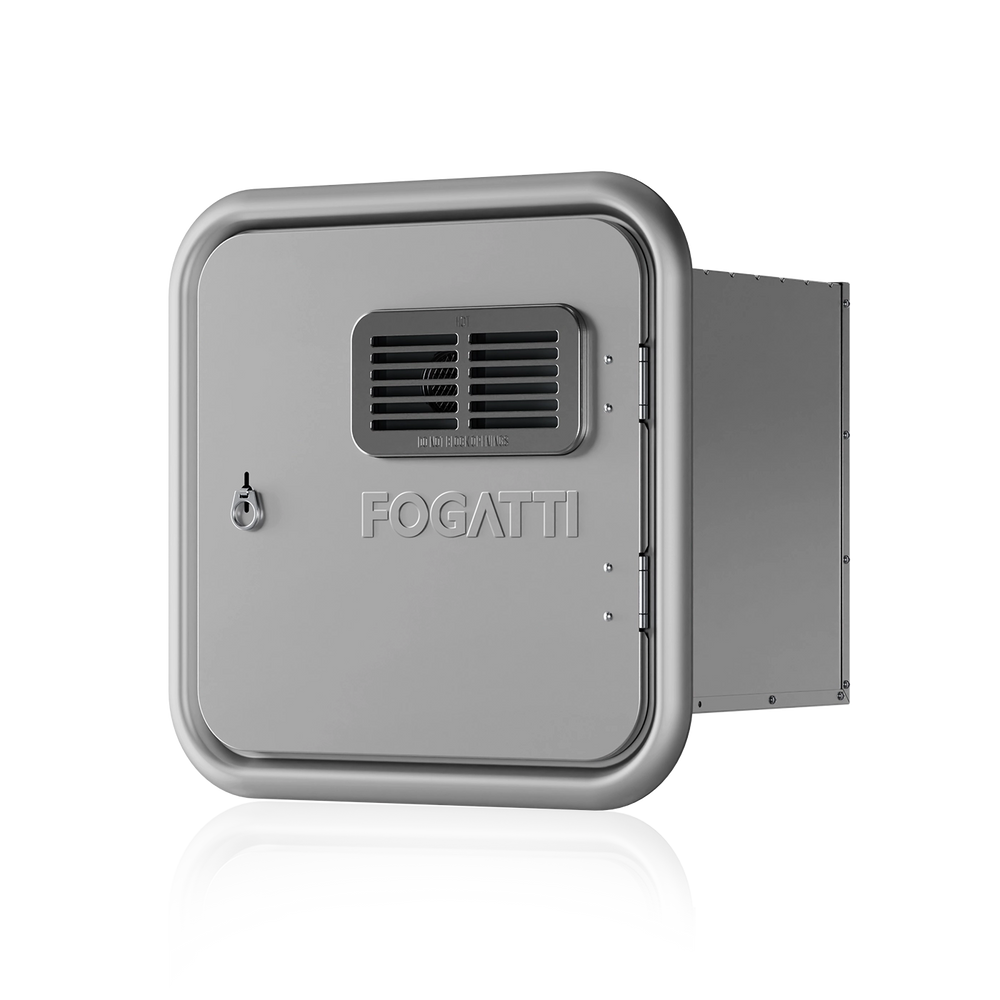
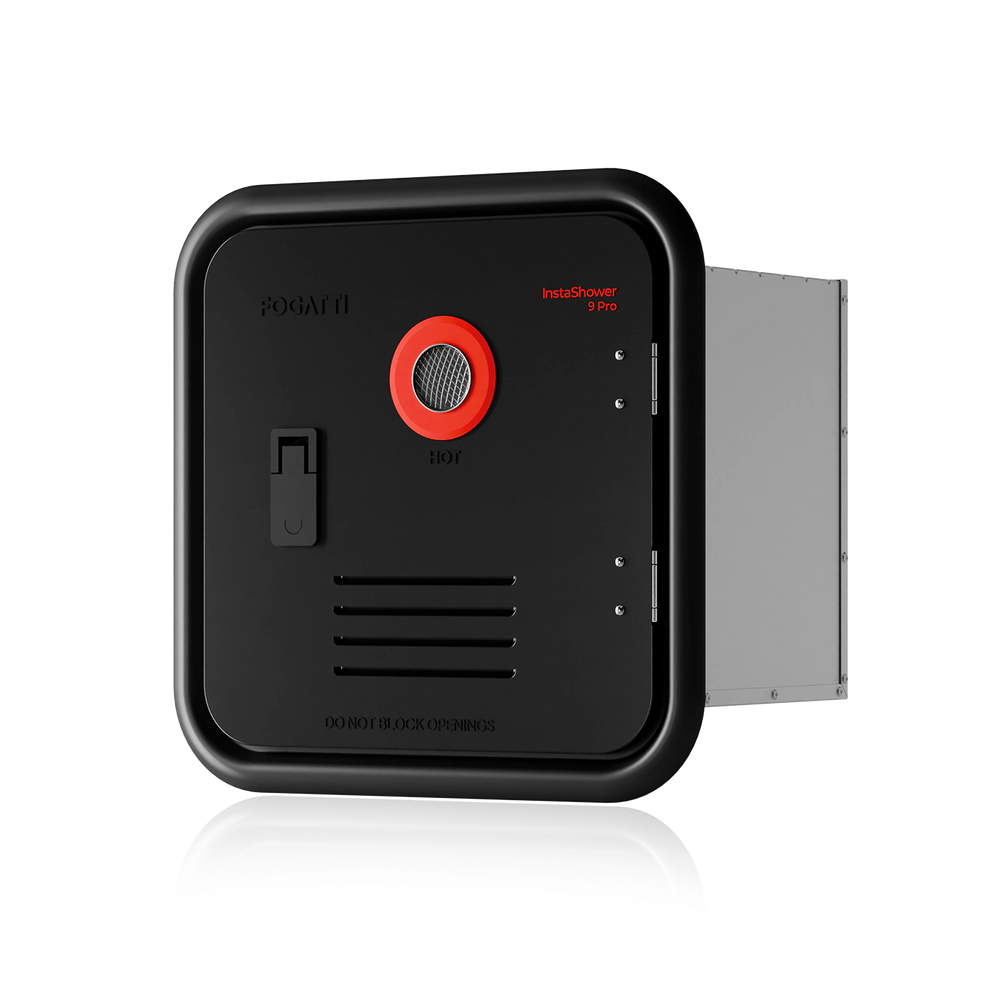
Fogatti's InstaShower series was engineered with exactly these off-grid scenarios in mind. With over 20 years of OEM engineering experience (Fogatti has been building water heating systems since 2003 and has served 800,000+ customers across 80+ countries, including OEM partnerships with Forest River and Gulf Stream), the mixing-tank architecture reflects real-world field data from boondockers, not just lab testing on steady water supplies.
That said, no tankless design fully eliminates the need for adequate propane supply and 12V power. A mixing tank solves the pump-cycling problem, but you still need to manage the other two variables. The checklist in the next section applies to every tankless unit, regardless of design.
Your Boondocking Pre-Shower Checklist: Five Checks Before You Turn the Tap
Everything above distills into a concrete, repeatable routine. Run through these five checks before every shower at a dispersed site, and you'll eliminate the most common failure modes before they ruin your morning.
- Propane tank level: Confirm your tanks are above 1/4 full. Below that threshold, vapor pressure drops too low for reliable high-BTU ignition, especially in cool weather or at altitude.
- Regulator reset: If the heater failed to ignite on your last attempt, perform the excess-flow valve reset. Close the tank valve completely, wait 30 seconds, then reopen it slowly and steadily. This clears the most common "phantom empty tank" failure.
- Battery voltage: Check your battery bank under load. You need 12.4V or higher before firing the heater. If you're low, run your solar or generator for 30–60 minutes first.
- Pump pressure: Run a tap briefly and listen for pump cycling. If the pressure swings feel severe (you'll hear the pump kicking on and off rapidly), fill your fresh tank higher to reduce pump workload and give it a more stable duty cycle.
- Appliance stacking: Don't run the furnace, water heater, and stove simultaneously. Stagger high-BTU appliance use to keep total demand well within your regulator's capacity. Turn off the furnace before you shower. Cook after, not during.
Bonus tip: After a propane tank swap, purge air from the lines by lighting a stove burner first and letting it run for 30 seconds. The stove's larger orifice can push through air pockets that would block your tankless heater's smaller burner.
Take the Guesswork Out of Off-Grid Hot Water
The gap between shore power performance and boondocking performance isn't a defect in your heater. It's a system-level challenge involving pressure, propane, and 12V power, all interacting at once. Understanding each variable puts you in control instead of guessing at random fixes.
With 9.91 million U.S. households RVing in 2025 and dispersed sites filling faster every season, more RVers than ever are working through these exact challenges. The boondocking community is growing, and the collective knowledge is growing with it.
If you're not sure which tankless unit matches your rig's pump output, propane setup, and boondocking style, Fogatti's Help Me Choose advisor tool can walk you through the specifics. It's built to match you with the right unit based on your actual setup, not generic recommendations.
The best boondocking trips are the ones where the systems work so well you stop thinking about them. That starts with understanding what's actually happening behind the panel.
Sources
- Boondocking & Public Land RV Usage Data 2026 (RV Brands)
- Mixing-Tank vs. Standard Tankless RV Water Heater (Fogatti Living Blog)
- Best PSI Setting for RV Water Pressure Gauge with Tankless Water Heater (Forest River Forums)
- Best Tankless Water Heaters for RVs & Camping 2026 (Tankless Geek)
- What Should RV Water Pressure Be? Safe PSI and Low-Pressure Fixes (Mr. RV Expert)
- How to Fix Low RV Propane Pressure (PrkEd)
- A Complete Guide to RV Propane Gas Regulators (RV Upgrade Store)
- RV Water Heater Not Working? Troubleshooting (Camp Addict)
- On-Demand RV Water Heaters for Low Pressure and Winter Camping (iRV2 Forums)
- RV Tankless Water Heater Problems and What to Check First (DoItYourselfRV)
- Global Camping Statistics and Trends 2026 (Camper Champ)