


The Heat Pump Button in January: Smart Move or Costly Mistake?
A full-time RVer in Phoenix ran a 12,000 BTU rooftop heat pump through three winter weeks with average overnight lows around 52°F. The result: a 68% reduction in propane use. Meanwhile, a fellow traveler in Moab, where average lows hovered around 28°F, watched the same type of heat pump cycle off 83% of the time. The propane furnace did 95% of the heating work. According to RVRoadLog, just 24°F of average outdoor temperature separated a propane-slashing success story from a near-total reliance on combustion heat.
That contrast defines the real question here. This is a three-way choice, not a simple either/or: Replace the propane furnace entirely, Supplement it with a heat pump for shoulder seasons, or let the two systems Compete in separate temperature bands with smart auto-switching handling the handoff.
The variables that determine which mode fits your rig are climate zone, camping style, and rig size. The 2027 generation of inverter-compressor rooftop units from manufacturers like Furrion, TURBRO, TOSOT, and Fogatti's own InstaCool line has genuinely changed the efficiency math, but it has not changed the underlying physics.
By the end of this article, you will have a clear decision framework, real cost comparisons, and a practical action plan for your specific setup.
How a Rooftop AC Heat Pump Actually Works (and How It Differs From a Propane Furnace)
A rooftop AC heat pump runs the refrigeration cycle in reverse. Instead of pulling heat out of your RV and dumping it outside (cooling mode), it extracts ambient heat from outdoor air and transfers it inside. No combustion. No flame. No exhaust venting. As RV.com explains, the system relies entirely on the thermodynamic properties of refrigerant to move heat rather than create it.
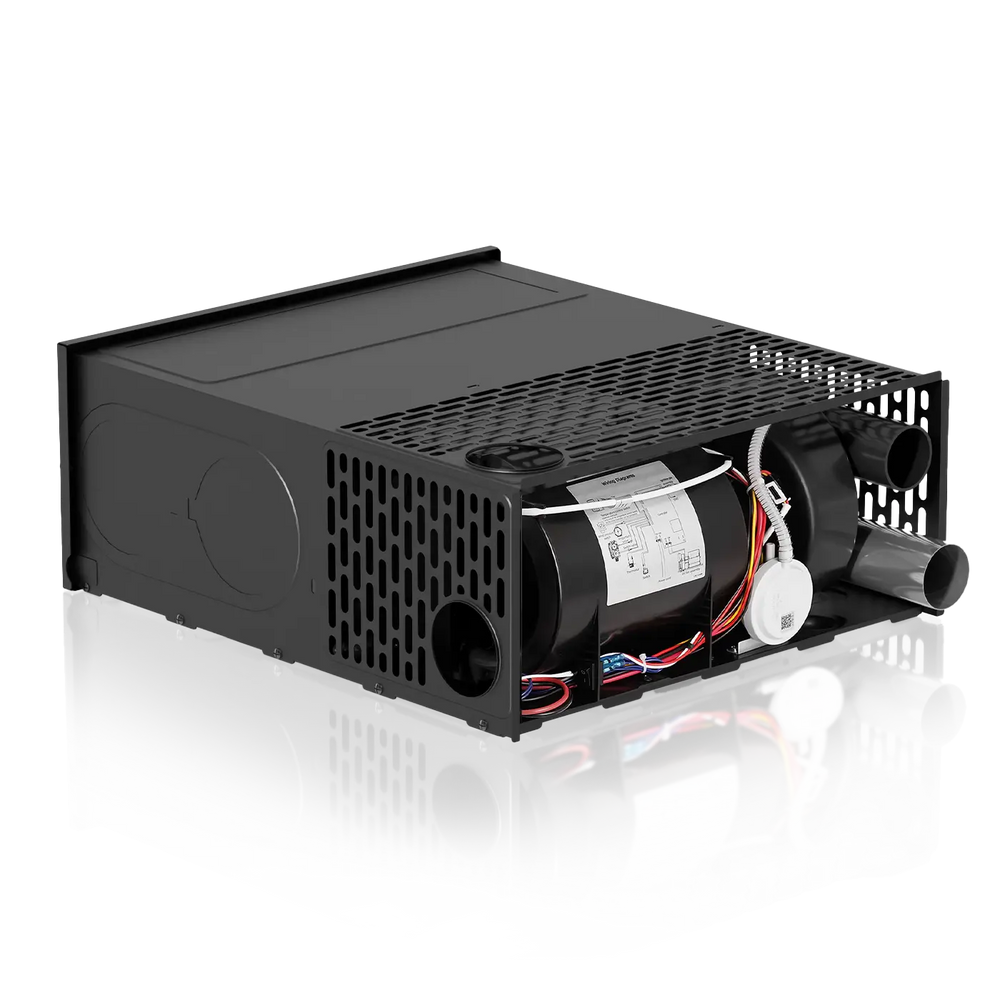
A propane furnace takes the opposite approach. It burns propane in a sealed combustion chamber, passes hot exhaust gases through a heat exchanger, and uses a forced-air blower to push warmed cabin air through floor-level duct registers. It works independently of outdoor temperature and remains effective well below 0°F. According to RJourney, this makes it the only reliable primary heat source for true cold-weather camping.
Here is the distinction that trips up the most buyers in 2027: many rooftop AC units marketed with a "heat" mode use a resistive electric element called a heat strip, not a reverse-cycle heat pump. A heat strip converts electricity to heat at a 1:1 ratio. A true heat pump, by contrast, produces 3 to 4 BTUs of heat for every 1 BTU of electricity consumed when outdoor temperatures sit between 45°F and 65°F. That is a Coefficient of Performance (COP) of 300% to 400%. The difference in propane savings potential is dramatic, and RV Air Lab has documented this as one of the most common buyer misconceptions in the current market.
Below 35°F, the math flips. COP collapses to under 1.2, making the heat pump less efficient than even electric resistance heating. The outdoor coil ices over, output drops sharply, and the unit may shut down entirely.
A standard propane furnace operates at roughly 60% thermal efficiency, meaning about 40% of propane energy is vented outside rather than heating the cabin. That sounds wasteful until you compare it to a heat pump struggling at 28°F. In mild weather, the heat pump's COP advantage is significant. In cold weather, propane wins on pure physics.
What's New in 2027: Inverter Compressors, Defrost Cycles, and Smart Auto-Switching
The rooftop heat pumps that earned the "useless below 40°F" reputation were single-speed compressor units from the 2020 to 2022 era. They ran at full blast or not at all, with crude defrost cycles that wasted energy and left gaps in heat delivery. The 2027 generation is a fundamentally different machine.
Variable-speed inverter compressors modulate output continuously, ramping up or down based on demand rather than cycling on and off. According to GreenWashing Index, modern 12V DC inverter RV AC units use up to 68% less power than traditional units. Across the board, inverter-compressor units deliver 20 to 30% better energy efficiency than their single-speed predecessors and can reduce propane consumption by up to 50% during the 35 to 50°F shoulder seasons.
Specific 2027-generation units worth knowing include the Furrion Chill Cube, the TURBRO GL14V, and the TOSOT GO Cool. Each features variable-speed compressors, WiFi smart controls, and low-GWP refrigerants.
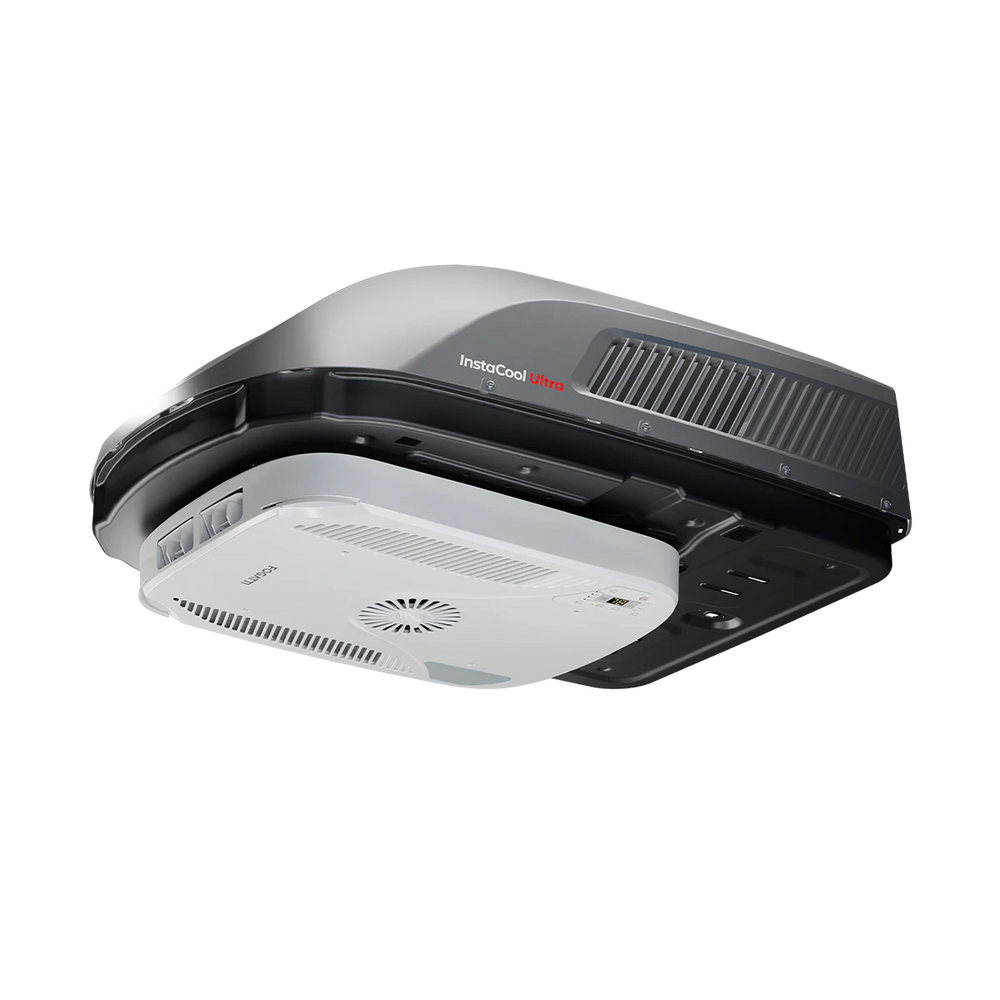
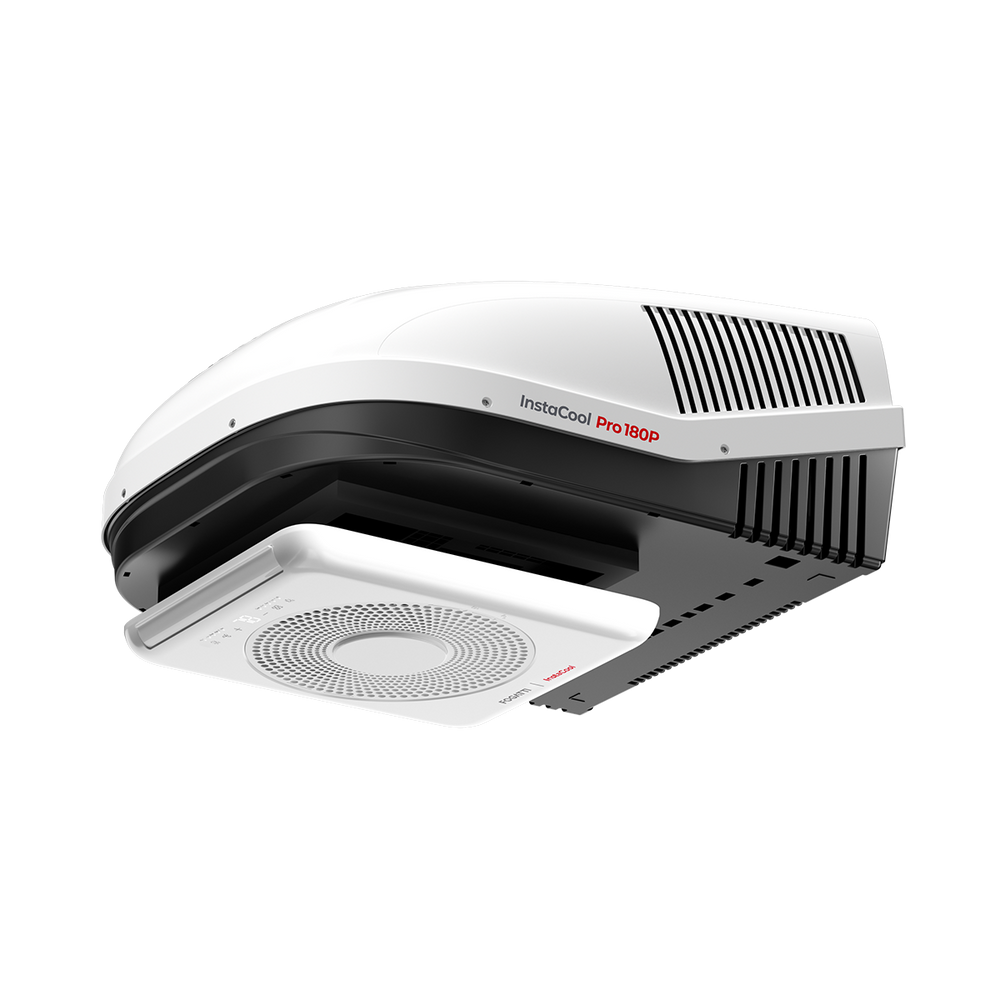
Fogatti's own InstaCool Ultra combines 16,000 BTU of cooling with a built-in heat pump, while the InstaCool Pro pushes 18,000 BTU and uses Fogatti's proprietary Climate X microchannel heat exchange technology, which remains stable at outdoor temperatures up to 115°F. As TrendHunter noted, this represents a meaningful step forward in rooftop climate control engineering.
One of the most practical 2027 advances is smart thermostat auto-switching. Programmable thermostats equipped with outdoor temperature sensors automatically hand off between heat pump and propane furnace at a set threshold. If the outdoor temp drops below 42°F, the thermostat cuts the heat pump and fires the furnace. No manual intervention. No guessing.
Worth noting: in September 2025, Lennox became the first manufacturer to have a commercial cold-climate heat pump rooftop unit verified by DOE laboratory tests. That is a commercial-scale milestone, but it signals clearly where the technology is heading for RV-scale units.
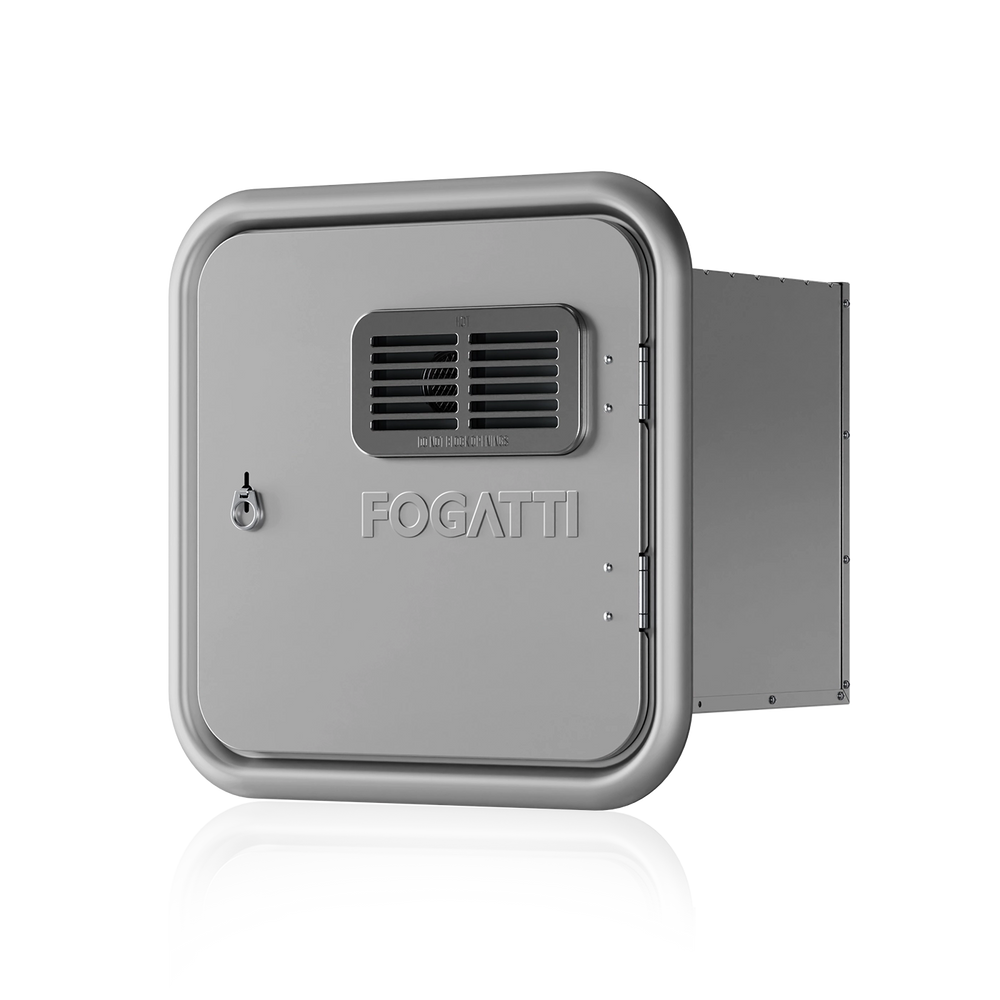
A new category is also emerging: all-electric RV furnaces. RV Comfort Systems has debuted a unit that fits the same footprint as a standard Suburban or Fogatti gas furnace and runs on 30-amp or 50-amp shore power. It sits between the heat pump and propane furnace as a third option, though it still requires shore power or a generator.
The Physics That Propane Still Owns: Temperature Limits, BTU Gaps, and Freeze Protection
Temperature floor. Most rooftop heat pumps become ineffective below 40 to 45°F as the outdoor coil begins to ice over. According to The RV Geeks, this is a hard physical constraint. Below 35°F, COP drops under 1.2 and the unit may shut down entirely. No software update or firmware patch can fully overcome the thermodynamic limits of refrigerant behavior at low ambient temperatures.
BTU capacity mismatch. Rooftop heat pumps max out at approximately 10,000 to 15,000 BTU of heating output. Larger RVs carry 30,000 to 40,000 BTU propane furnaces. As documented in iRV2 forum discussions, full replacement is physically impossible for bigger rigs regardless of brand or price point. Even running two rooftop heat pumps simultaneously may not match the furnace output a 38-foot fifth wheel demands on a cold night.
Freeze protection. This is the factor most articles underreport. A propane furnace distributes heat via floor-level duct registers that warm the underbelly, protecting water lines, holding tanks, and plumbing fittings from freezing. A rooftop heat pump blows warm air from the ceiling. Warm air rises; it does not naturally flow down to the lowest, coldest points of the rig. For any RVer who camps below 32°F, the furnace is essential for freeze protection even if the heat pump handles cabin comfort above that threshold.
Battery and power infrastructure. A heat pump requires 120V AC shore power or a generator. A propane furnace's blower fan draws only 3.5 to 7 amps of 12V DC, as noted by Forest River Forums contributors. For boondocking and dry camping, the furnace is the clear winner on power independence. A heat pump pulling 900W or more would deplete even a substantial battery bank in hours without solar or generator support.
Propane consumption in context. A 30,000 BTU furnace running continuously burns roughly one-third of a gallon of propane per hour (propane contains about 91,500 BTU per gallon). At current prices, that is roughly $0.85 per hour. Knowing this number helps you compare real-world propane costs against heat pump electricity costs for your specific camping patterns.
The Cost Math: When a Heat Pump Saves Money and When It Doesn't
At winter 2025-26 US average prices (propane approximately $2.55 per gallon, electricity approximately $0.1778 per kWh), a heat pump delivers heat for roughly $21 to $24 per million BTU. A propane furnace, factoring in its 60% thermal efficiency, costs roughly $29 to $35 per million BTU. According to ElectrifyTips, that is a meaningful advantage for mild-climate campers who spend most of their heating hours in the 45 to 65°F range.
The savings evaporate below 35°F. When COP collapses, the heat pump's electricity cost per BTU rises sharply. At a COP of 1.2, you are paying nearly as much per BTU as straight electric resistance heating, and the propane furnace becomes the cheaper option even at its 60% efficiency.
For boondockers, the capital cost of running a heat pump off-grid must be factored in. A surge-capable 2,200W or larger inverter and a 300Ah or larger LiFePO4 battery bank are required. Those components alone can add $1,500 to $3,000 or more to the total system cost, before accounting for solar panels or a generator.
Replacement cost benchmarks: swapping a 30,000 BTU ducted propane furnace runs approximately $700 to $1,200 installed. Premium inverter or heat pump rooftop AC upgrades reach $1,200 to $3,000 or more for parts alone, with professional installation adding further cost.
One regulatory factor to keep in mind: the 2027 NFPA 1192 standard (adopted from the RVIA enforcement date of September 1, 2026, and now fully in effect) covers fuel systems, plumbing, and electrical requirements for RV heating appliances. As reported by Bish's RV citing the RV Industry Association, compliance affects installation choices and costs for both propane and electric systems. If you are upgrading or replacing a heating appliance, verify that your installer is working to the current standard.
The Three-Mode Decision Framework: Replace, Supplement, or Compete?
The right answer depends on three variables: your climate zone (average low temperatures where you camp), your camping style (full hookup vs. boondocking), and your rig size (BTU demand).
Replace
Best for: small to mid-size RVs (under 28 feet), full-hookup campers in Sun Belt or mild coastal climates where winter lows rarely drop below 45°F. A 2027 inverter heat pump can functionally replace the propane furnace for most nights. Keep propane plumbed and available for rare freeze emergencies, but the heat pump handles the daily workload. This is where the cost-per-million-BTU math works hardest in your favor.
Supplement (the shoulder-season sweet spot)
Best for: any RV that mixes mild-weather camping (spring and fall, 40 to 65°F) with occasional cold-weather trips. The heat pump handles 60 to 70% of heating duty and cuts propane use significantly. The furnace handles sub-freezing nights and freeze protection. This is the most common and most cost-effective setup for North American RVers. You get the propane savings during the months when the heat pump's COP is highest, and you keep the furnace ready for the nights it is truly needed.
Compete
Best for: large motorhomes or fifth wheels (30,000 to 40,000 BTU furnace), frequent boondockers, or cold-climate campers. The heat pump and furnace operate in separate temperature bands rather than competing for the same job. The heat pump handles mild nights above 40 to 45°F. The furnace owns anything below that. Smart auto-switching thermostats manage the handoff automatically, so you are not waking up at 2 a.m. to flip a switch.
Here is a quick-reference decision table:
- Mild climate + full hookups + small rig → Replace
- Mixed climate + mostly hookups + any rig size → Supplement
- Cold climate or frequent boondocking + large rig → Compete
As a trusted OEM supplier to brands like Forest River and Gulf Stream, Fogatti sees these configurations play out across thousands of rigs every year. If you are not sure which mode fits your setup, our Help Me Choose advisor tool can walk you through your rig, typical camping temperatures, and power setup to land on a recommendation.
Boondocking vs. Shore Power: The Master Variable Most Articles Ignore
A heat pump is fundamentally a shore-power or generator appliance. It cannot run on a 12V battery alone without a substantial, expensive inverter-battery system. This single fact reshapes the entire debate depending on how you camp.
For full-hookup campers, the heat pump is almost always the right primary heat source in mild weather. Electricity is cheap, COP is high, and propane is preserved for cooking and water heating. The economics are straightforward.
For dry campers and boondockers, the propane furnace remains the clear choice. Its 3.5 to 7 amp 12V draw is manageable on a standard battery bank. A heat pump pulling 900W or more would deplete even a 300Ah LiFePO4 bank in hours without solar or generator support.
Practical tip for RVers who boondock occasionally but mostly camp with hookups: keep the propane furnace in place and use the heat pump as the primary source at campgrounds. The dual-system approach costs more upfront, but it pays back quickly in propane savings during the 70 to 80% of nights you spend plugged in. When you head off-grid, the furnace is right there waiting.
Putting It All Together: Your 2027 RV Heating Action Plan
Here is the framework in plain language. Replace if you are a mild-climate, full-hookup camper with a small rig. Supplement if you mix warm and cool weather camping across the shoulder seasons. Let the two systems Compete (with smart auto-switching) if you run a large rig or camp in cold climates.
Regardless of which mode applies, one rule is non-negotiable: any RVer who camps below 32°F needs a propane furnace or an all-electric furnace alternative with floor-level heat distribution. The rooftop heat pump cannot protect your plumbing. Period.
Before you spend a dollar on upgrades, audit your current setup. Check whether your rooftop unit has a true reverse-cycle heat pump or just a heat strip. Verify the BTU output rating on both your AC and your furnace. Write down the typical overnight low temperatures for the places you camp most often. Those three data points will tell you more than any spec sheet.
If you are evaluating a heating upgrade, the Fogatti InstaCool Ultra (16,000 BTU cooling with built-in heat pump) and InstaCool Pro (18,000 BTU with Climate X microchannel technology) represent the 2027 generation of inverter heat pump engineering. Our Help Me Choose advisor tool is built to match your specific rig, climate, and camping style to the right configuration.
The 2027 generation of inverter heat pumps has genuinely changed the calculus for millions of RV owners. The best heating system, though, is the one matched to how and where you actually camp, not the one with the most impressive spec sheet. Start with your climate, your camping style, and your rig. The right answer will follow.
Sources
- RVRoadLog — Small RV Heat Pump Guide
- RV.com — What Are the Advantages of an RV Heat Pump?
- RJourney — Heating an RV in Winter
- RV Air Lab — Best RV Air Conditioner 2026
- Fogatti Blog — RV Appliance ROI
- GreenWashing Index — Best RV Rooftop Air Conditioners
- Habitatista — Best RV HVAC Systems
- Lippert/Furrion — Furrion Chill RV Air Conditioners
- TrendHunter — Fogatti InstaCool Pro
- RV Pro — RV Comfort Systems All-Electric Furnace
- The RV Geeks — What Is an RV Heat Pump?
- iRV2 Forums — Heat Pumps: What Ambient Temp to Not Use
- ElectrifyTips — Heat Pump vs Propane Furnace Running Cost
- Bish's RV — RV Industry Market Update
- Analyst View Market Insights — HVAC Rooftop Units Market
- RV Pro — Do RVers Still Need a Furnace?