


You're parked at a campground with shore power, and the temperature is starting to drop. Your propane furnace keeps the RV warm, but every time it kicks on, you hear the blower. Meanwhile, there's a small electric space heater sitting in the corner.
Why not use the electric heater instead? You could save some propane, avoid another trip to refill the tank, and perhaps enjoy a quieter evening.
A portable electric space heater can sometimes handle the heating needs of a small RV in mild weather while you're awake and nearby. It should not be treated as an overnight replacement for the furnace, and it may not heat other compartments that rely on the RV's heating system.
Here's what to consider before making the switch.
RV Furnace vs. Electric Space Heater: What's Different?
Both heaters can make your RV more comfortable, but they deliver heat differently.
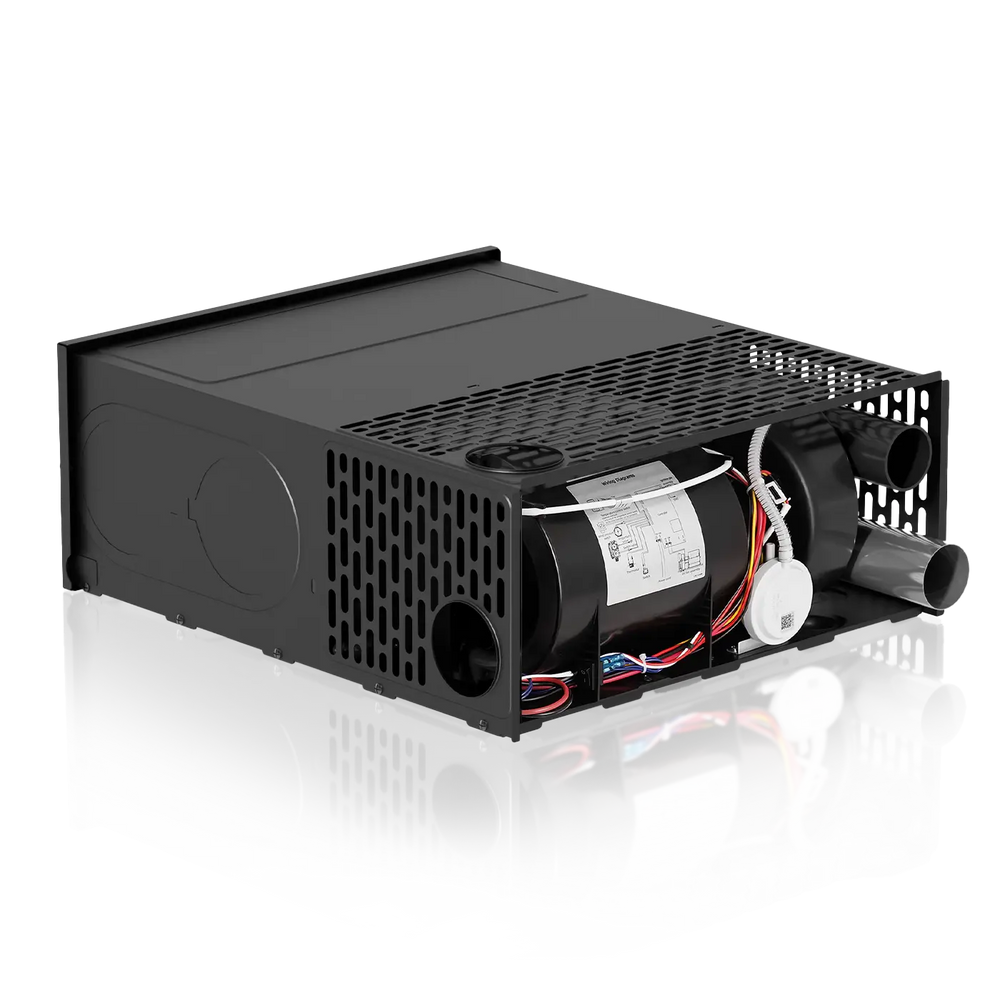
A built-in RV propane furnace burns propane for heat while using 12V DC electricity to operate its blower and controls. Depending on the installation, it may supply warm air directly into the living area or distribute it through ductwork.
A portable electric space heater uses electricity to warm the surrounding area. It doesn't connect to your RV's furnace ductwork, so its effectiveness depends on where you place it and how air moves through the RV.
| Comparison | RV Propane Furnace | Electric Space Heater |
|---|---|---|
| Energy source | Propane + 12V DC | Typically 120V AC |
| Heating coverage | Depends on the installation; ducted systems can distribute heat to multiple areas | Primarily the surrounding area |
| Portability | Built-in | Portable |
| Noise | Blower and burner cycling | Varies by heater design |
| Best use | Primary RV heating when appropriately sized and installed | Supplemental or localized heating with adequate electricity |
One important difference is heating capacity.
A typical 1,500W electric space heater produces about 5,118 BTU of heat per hour at full power. RV furnaces commonly have much higher rated capacities, although furnace BTU input ratings shouldn't be compared directly with electric heat output without accounting for efficiency.
That difference becomes more noticeable as outdoor temperatures fall.
Which Costs Less at a Campground?
Saving propane is one of the biggest reasons RV owners consider electric space heaters.
But whether electricity actually costs less depends on your campsite.
When electricity is included in your campsite fee
If your campground includes electricity in the nightly rate without separate usage charges, using a space heater may reduce your propane expenses.
If that electric heating reduces how often your propane furnace runs, you may use less propane.
Check the campground's rules for portable heaters and any electricity surcharges before relying on this option.
When electricity is billed separately
At monthly or long-term RV sites, electricity may be metered.
A heater running continuously at 1,500 watts for four hours uses 6 kWh. At an illustrative electricity rate of $0.20 per kWh, that costs $1.20. Actual consumption will vary with the heat setting and thermostat cycling.
Whether electric heating costs less than propane depends on the local electricity rate, propane price, furnace efficiency, and actual heating demand.
There's no universal winner.
If you want to estimate how much fuel your furnace uses, see our guide to estimating RV propane use.
Can a Space Heater Keep Your Whole RV Warm?
Sometimes, especially in mild weather and smaller RVs. But warming the area around your seat isn't necessarily the same as heating your entire RV.
You might feel comfortable sitting near an electric heater while the bathroom, bedroom, or storage compartments remain noticeably colder.
Interior partitions, closed doors, poor insulation, and limited air circulation can all create uneven temperatures.
A properly installed ducted furnace may distribute heat more effectively across different areas of the RV.
What about your water lines?
This is where replacing the furnace deserves extra consideration.
Some RVs route furnace-heated air into enclosed underbelly areas or compartments containing plumbing. If an electric heater keeps the living area warm enough that the furnace stops running, those areas may no longer receive the same heat.
Not every RV uses this arrangement, so check your owner's manual or contact the manufacturer before assuming your plumbing depends on furnace heat.
For more on this issue, read A Warm RV Doesn't Mean Your Water Lines Won't Freeze.
What Changes When You're Using Shore Power?
Having shore power makes electric heating possible without relying on a large battery bank. However, it doesn't mean you have unlimited electricity.
A typical 30-amp RV connection provides a theoretical maximum of 3,600 watts at 120V.
A 1,500W space heater alone draws about 12.5 amps.
Add a microwave, coffee maker, or another high-power appliance, and you could overload a circuit or exceed your RV's available electrical capacity.
Individual outlets and branch circuits also have their own limits. Having enough total shore power doesn't automatically mean a particular outlet can safely handle a heater.
Before using one, check your RV's electrical specifications, the heater's requirements, and the condition of the outlet.
Never use an extension cord or power strip to operate a portable electric space heater. Plug it directly into a suitable wall outlet.
If shore power is your heater's only power source, it will stop when that supply fails. A propane furnace can generally keep operating as long as sufficient propane and 12V power remain available.
That backup matters when you're camping in cold weather.
Is an Electric Space Heater Quieter Than an RV Furnace?
One reason RV owners look for alternatives to propane furnaces is the repeated sound of the blower starting and stopping.
An electric heater may offer a quieter experience, but it depends on the type.
Fan-forced electric heaters still produce airflow noise. Oil-filled radiator-style heaters generally have no circulation fan, although they may make occasional thermostat-related sounds.
So electric doesn't automatically mean silent.
Thermostat placement also matters. If a space heater warms the area around your RV's furnace thermostat, the furnace may cycle less frequently even when other areas still need heat.
A Note About Overnight Safety
A portable electric space heater isn't inherently unsafe in an RV, but the limited space can make safe placement more challenging. Bedding, curtains, and furniture may be closer than the heater manufacturer's required clearance allows.
The U.S. Consumer Product Safety Commission (CPSC) recommends keeping portable heaters at least three feet away from combustible materials, plugging electric models directly into suitable wall outlets rather than extension cords or power strips, and turning them off before sleeping or leaving them unattended.
Even with tip-over shutoff or overheating protection, a heater must still be used according to its instructions and your RV's electrical limits.
For overnight warmth, rely on an RV heating system approved for that use.
Which Setup Makes Sense for Your Trip?
There's no single heating setup that works for every RV or every winter trip.
Mild Weather With Shore Power
A portable electric heater can be useful for supplemental warmth while you're awake and nearby. It may help reduce furnace runtime and propane consumption, provided your electrical system can safely support it.
Freezing Temperatures
Your built-in furnace is generally the more practical primary heating source, especially if your RV relies on it to distribute warmth to multiple areas or protect certain plumbing compartments.
An electric heater shouldn't replace it without understanding how your RV handles heat and freeze protection.
Boondocking Without Shore Power
A conventional 120V electric space heater requires substantial electrical power, making it impractical for many off-grid setups.
A propane furnace is often the more realistic choice, although its blower and controls still require 12V electricity.
If you're reviewing your heating setup for colder trips, choosing the right RV furnace starts with understanding your RV's heating needs, available installation space, and existing heating system.
Frequently Asked Questions
Can you use a space heater in an RV?
Yes. A portable electric space heater can provide supplemental warmth in an RV while you're awake and nearby, provided its required clearances, electrical requirements, and operating instructions can all be met. Turn it off before sleeping or leaving it unattended.
Can you run an RV furnace and a space heater at the same time?
Yes, in many RVs. Just remember that a space heater can affect the temperature sensed by your furnace thermostat and change how often the furnace runs. Make sure both systems are used within their electrical and safety requirements.
Is an electric space heater the same as an RV heat pump?
No. A conventional electric space heater converts electricity directly into heat, while an RV heat pump transfers heat from outdoor air into the RV.
Heat pumps can provide more heat per unit of electricity under suitable conditions, but their performance depends on outdoor temperatures.
Learn more in our Heat Pump vs. Propane Furnace guide.