


Why Your RV Furnace Keeps Turning On and Off
It's 2 AM, 18°F outside your rig, and your furnace is clicking on every three minutes, running briefly, then shutting off. You're awake, cold, and burning through propane with nothing to show for it. This is short cycling, one of the most common complaints across the entire RV fleet.
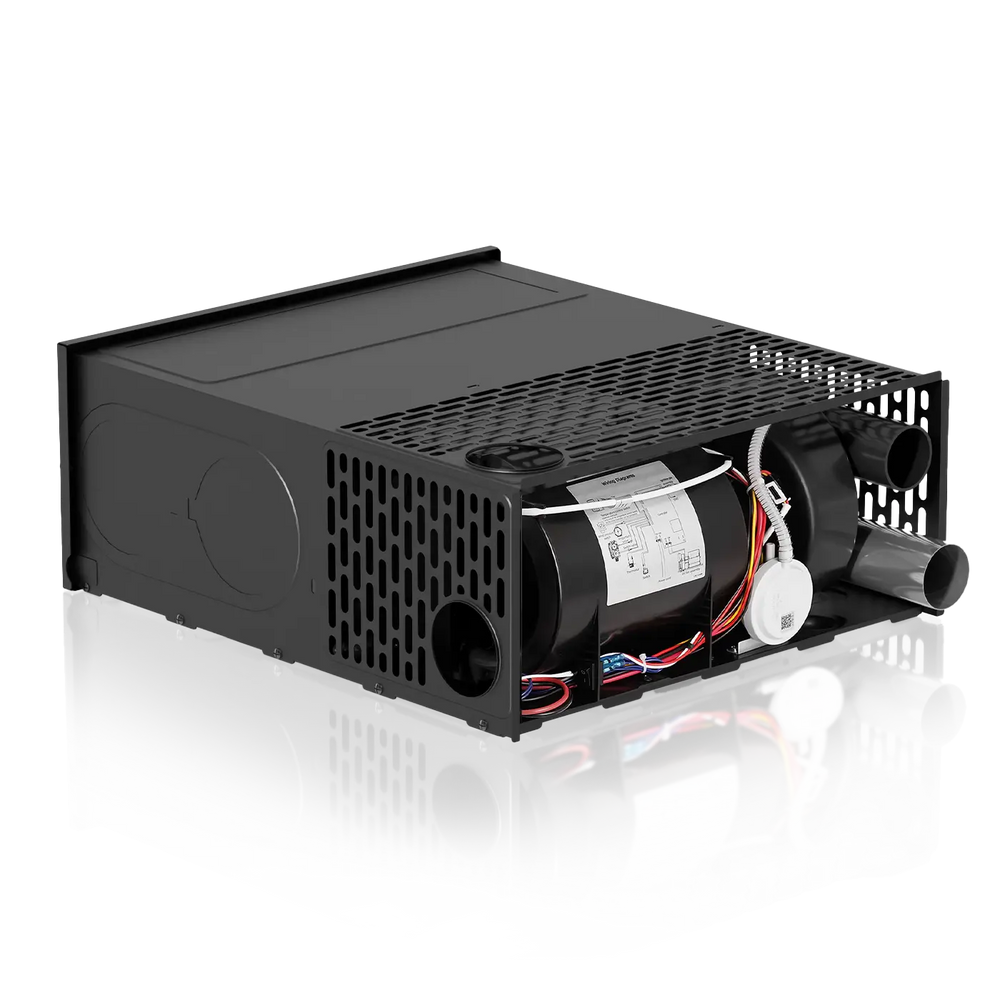
Short cycling is any interruption of your furnace's multi-stage ignition sequence before the RV reaches the set temperature. Here's how that sequence works: the blower runs for roughly 15 seconds to purge the combustion chamber, the sail switch confirms adequate airflow, and then the control board opens the gas valve and fires the igniter. A failure at any one of these stages causes a short cycle.
According to RVshare, 95% of factory-equipped RVs use propane forced-air furnaces, making this a near-universal problem. But not all short cycling is the same. There are two fundamentally different types: thermostat-driven cycling, where the furnace works correctly but cycles too fast because the thermostat is satisfied prematurely, and safety-switch-driven cycling, where the furnace shuts down due to overheating, flame loss, or airflow failure. These require completely different fixes.
Beyond lost sleep, short cycling wastes propane, drains your 12V battery faster, and accelerates wear on expensive components like the heat exchanger and control board. The sections below walk through exactly how to diagnose and fix each cause.
Symptom-to-Cause Diagnostic Map: What Your Furnace Is Actually Telling You
Most troubleshooting guides organize advice by component. That's backwards. You don't know which component is failing until you identify your symptom. Here's a diagnostic framework built around what you're actually seeing and hearing.
Symptom 1: Fan runs for ~15 seconds, no ignition, furnace shuts off. This points to a sail switch failure or low battery voltage. The blower runs but can't confirm airflow (or the control board lacks sufficient voltage to proceed), so ignition never happens.
Symptom 2: Furnace ignites, then shuts off within 30 to 60 seconds. This points to flame sensor (thermocouple) contamination or weak propane pressure. The flame lights but the control board can't confirm it's stable, so it kills the gas valve.
Symptom 3: Furnace runs 2 to 4 minutes, shuts off, restarts after a pause. This points to the high-limit switch tripping due to airflow restriction. The heat exchanger overheats, the safety switch cuts the gas, the blower cools things down, and the cycle repeats. This is called "limiting."
Symptom 4: Furnace cycles every 3 to 5 minutes and seems to heat the RV, but never stays on long. This points to thermostat placement, anticipator settings, or poor insulation causing the thermostat to reach the set point before the rest of the RV warms up.
Mixing these scenarios is why most DIY attempts fail. The fix for Symptom 1 will not solve Symptom 3. Identify your symptom first, then work the cause.
Thermostat Problems: The Most Overlooked Short Cycling Cause
If your furnace runs through its full ignition sequence, produces heat, and then shuts off after just a few minutes only to restart shortly after, the thermostat is the first place to look — not the furnace itself.
Placement matters more than most owners realize. If a duct blows warm air directly toward the thermostat, it reaches the set temperature before the rest of the RV is actually warm. The furnace shuts off, the thermostat cools down, and the cycle restarts. According to Camping World, thermostat placement near drafty windows, exterior walls, or floor registers is a leading cause of perceived short cycling.
Problem locations include floor registers, exterior walls adjacent to drafty windows or doors, and slide-out areas with poor sealing. The correct location is an interior wall, away from direct duct airflow, at roughly average breathing height (about 5 feet), and never inside a cabinet or closet.
The thermostat anticipator: a fix almost nobody talks about. Older analog thermostats have a small adjustable component called the anticipator. It controls cycle frequency by adding a tiny amount of heat to the thermostat sensor, causing it to shut off the furnace slightly before the set temperature is reached. When the anticipator is set incorrectly, the furnace short cycles. Check your furnace manual for the correct anticipator setting (measured in amps) and adjust accordingly. This single adjustment has resolved short cycling for countless RV owners, as documented on Daisy RV and other forums.
Digital thermostats and temperature differential. If you're running a digital thermostat, look for the temperature differential (hysteresis) setting. A ±1°F swing causes constant cycling because the interior temperature fluctuates past the set point almost immediately. A ±3°F swing gives the furnace time to run a proper heating cycle. If your digital thermostat doesn't offer adjustable differential, upgrading to one that does is one of the smartest investments you can make.
The small trailer problem. In small, poorly insulated travel trailers, rapid cycling can be inherent to the setup. As documented on Escape Forum, the interior heats and cools so fast that 1°F temperature swings are constant, triggering the furnace repeatedly even when everything is working correctly. The real fix here is reducing heat loss: window insulation film, upgraded door seals, and RV skirting all slow the rate of heat loss and give the furnace longer, more efficient run cycles.
The Sail Switch: A $12 Part That Strands RVers in the Cold
The sail switch is a small flap inside the furnace housing that's pushed closed by blower airflow. When it closes, it signals the control board that the blower is moving enough air to safely proceed with ignition. If it fails to close, the control board will not allow ignition, and your furnace cycles off immediately after the blower starts.
There are four common failure modes. First, dust and debris accumulation on the flap prevents it from moving freely. Second, cold-temperature plastic deformation stiffens the flap so it won't swing. Third, manufacturing defects can make the switch unreliable from the start. Fourth, physical damage from vibration or contact during storage or travel.
On the manufacturing front, Dometic had a well-documented issue where the plastic bezel holding the sail switch prevented the switch from closing in colder temperatures, directly causing short cycling in affected units. This was traced and discussed extensively on iRV2 Forums. If you own a Dometic furnace and experience short cycling only in cold weather, investigate this before anything else.
How to test the sail switch: With the furnace running, listen for a distinct click when the blower starts. If you don't hear it, the flap may not be closing. For a definitive test, use a multimeter set to continuity. Manually depress the flap; you should get a closed circuit. If not, the switch is faulty.
The field fix: Carefully clean the flap and its pivot point with compressed air. Inspect for physical deformation. If the flap is warped, cracked, or won't close reliably after cleaning, replace it. The part typically costs $10 to $15.
The most practical advice: carry a spare sail switch. As recommended by experienced RVers on MyGrandRV, treat it as a consumable wear item like a fuse, not a rare failure. Being stranded without heat at 0°F is a genuine safety risk, and a $12 part in your toolkit can prevent it.
Airflow Restrictions and the High-Limit Switch: The "Limiting" Cycle Explained
If your furnace runs for 2 to 4 minutes, shuts off, then restarts after a brief pause, you're likely dealing with "limiting." This is the high-limit switch doing its job.
The high-limit switch is a safety device mounted on or near the heat exchanger. When the exchanger overheats because heat isn't being carried away fast enough by airflow, the switch trips and cuts the gas valve. The blower continues running, cools the exchanger, the switch resets, and the furnace fires again. This cycle repeats until the airflow restriction is resolved.
The most common airflow restrictions:
- Blocked or kinked flex duct behind walls or under floors
- Closed floor registers (never close more than 20% of registers in an RV system)
- Items stored against or on top of the return air vent
- Collapsed flexible ducting that has pulled away from fittings
Duct diagnostic procedure: With the furnace running, feel each register for airflow. If one or more registers have noticeably weak output, you've found a restriction. Remove one duct run at a time to isolate a collapsed or kinked section. Visually inspect the return air vent for obstructions; even a blanket draped over it can trigger limiting.
How to identify a collapsed flex duct: Look for flat sections, sharp bends greater than 90 degrees, or sections that have pulled away from their fittings. These are often invisible from the living space because they run behind walls or under the floor, but they can completely block airflow.
The fix: Straighten and re-support kinked ducts with proper hangers or straps. Open all registers. Clear the return air vent. Replace any collapsed flex duct sections with new material of the same diameter.
A furnace running in "limiting" mode is more than annoying. It accelerates heat exchanger fatigue and can eventually crack the exchanger, creating a carbon monoxide risk. If your furnace is limiting, treat it as urgent.
Propane Pressure and Cold Weather: Why a Half-Full Tank Can Still Fail
Here's the physics that catches cold-weather campers off guard: propane is stored as a liquid, and it must vaporize to flow to your furnace. The rate of vaporization depends on temperature and the amount of liquid in the tank. At 0°F, tank pressure is approximately half of what it is at 50°F. A half-full tank in a cold snap can deliver insufficient pressure to sustain a stable flame.
The failure sequence looks like this: the furnace ignites, but the flame is too weak for the flame sensor to confirm. The control board shuts the gas valve within seconds. This is cold-weather short cycling, and most owners misdiagnose it as a sensor problem when the real issue is fuel supply.
A failing propane regulator compounds this problem. If the regulator can't flow sufficient gas volume due to age, debris, or a frozen diaphragm, you get the same symptom: ignition, weak flame, safety shutdown. As discussed on iRV2, a faulty regulator is a documented cause of short cycling that's often overlooked.
The diagnostic: If short cycling only occurs in cold weather and your tank is above 20% full, suspect propane pressure before replacing sensors. Wrap the tank with an insulating blanket (never use an open flame) and test again. If the furnace runs normally with a warmed tank, you've confirmed the cause.
Tank orientation matters too. Horizontal tanks lose vapor surface area and pressure faster than vertical tanks in cold weather. Keeping tanks upright and above 25% full during winter camping is a practical prevention step.
The cost of short cycling in propane terms: A standard 30,000 BTU RV furnace consumes approximately 1/3 gallon of propane per hour of continuous operation. Short cycling increases cumulative burner run time and can push consumption to 4 to 8 lbs per day in cold weather, according to Fogatti's RV Propane 101 guide. That adds up fast on a multi-week trip.
Battery Voltage: The Silent Short Cycling Trigger Boondockers Miss
Your RV furnace runs on propane for heat, but it depends entirely on 12V DC power for the blower, control board, and igniter. RV furnace blowers typically draw 6 to 12 amps. When battery voltage sags below 11.0 to 11.5V under that load, you get erratic ignition, weak flame-proof signals, and control board lockouts — all of which look exactly like short cycling.
Here's the critical distinction most troubleshooting guides miss: voltage must be measured under load, not at rest. A battery reading 12.4V at rest can sag to 10.8V under a 10-amp blower draw, as noted by Daisy RV's troubleshooting guide. That 10.8V is below the threshold where most control boards operate reliably.
Under-load voltage test procedure:
- Connect a multimeter to your battery terminals (positive to positive, negative to negative).
- Set the multimeter to DC voltage.
- Start the furnace and let the blower engage.
- Read the voltage while the blower is running. Below 11.5V indicates a battery problem, not a furnace problem.
The math on battery drain: A 100Ah lead-acid battery with 50% usable capacity gives you 50Ah. A 6-amp blower can run for roughly 8 hours on that. Short cycling dramatically increases cumulative blower run time because the blower runs during every failed ignition attempt. An overnight short cycling episode can drain a battery bank completely.
Boondockers and solar RV setups are especially vulnerable. Aging lithium or lead-acid battery banks with reduced capacity may test fine at rest but fail under furnace load in cold weather, when internal resistance rises. If you're dry camping in cold conditions, charge your battery bank fully before nightfall.
The fix: Charge your batteries, then check for corroded or loose wiring connections at the furnace itself. Spade connectors and ground terminals are common failure points. Squeezing loose spade connectors with pliers to restore solid contact is a documented field fix that has resolved short cycling for many RV owners.
Flame Sensor Contamination: When the Furnace Ignites but Won't Stay On
The flame sensor (also called a thermocouple in some furnace designs) has one job: confirm that a live flame is present after ignition. It does this by generating a small electrical signal when heated by the flame. If the sensor is coated with soot or corrosion, it can't generate a strong enough signal, and the control board shuts the gas valve within seconds as a safety precaution.
The symptom is distinctive: the furnace ignites with a visible flame, runs for 5 to 15 seconds, then shuts off. This is post-ignition short cycling, completely different from the no-ignition scenario caused by a sail switch or battery issue. According to Pick Comfort, flame sensor contamination is one of the most common causes of this specific failure pattern.
Cleaning procedure:
- Shut off propane at the tank and disconnect 12V power to the furnace.
- Locate the flame sensor rod in the burner assembly (it's a thin metal rod positioned in the flame path).
- Gently clean the rod with fine emery cloth or steel wool to remove soot and oxidation.
- Reinstall, restore power and propane, and test.
Before replacing the sensor, inspect all spade connectors and ground terminals at the furnace control board. Corroded wiring connections can mimic flame sensor failure by degrading the signal path. If cleaning doesn't resolve the issue after two attempts, the sensor rod itself may be cracked or the thermocouple may have lost calibration. Replacement sensors typically cost $15 to $30.
Seasonal Maintenance Checklist to Prevent Short Cycling Before It Starts
The best way to deal with short cycling is to prevent it. Here's a pre-winter and mid-season checklist to run through before every cold-weather trip.
Pre-season checks:
- Inspect and clean the sail switch flap with compressed air
- Test battery voltage under load (with the blower running)
- Inspect all flex duct runs for kinks, collapse, or disconnected fittings
- Clear the return air vent of any stored items or debris
- Confirm all floor registers are open
- Inspect the propane regulator for age and proper function
Mid-season checks:
- Monitor furnace cycle frequency as a leading indicator (if cycles are getting shorter and more frequent, a sensor or airflow issue is developing)
- Keep propane tank level above 25% in cold weather
- Inspect wiring connections at the furnace for corrosion, especially spade connectors and ground terminals
Thermostat audit:
- Verify the thermostat is not near a floor register or on an exterior wall
- Confirm digital thermostat differential is set to ±2 to 3°F
- If using an analog thermostat, check the anticipator setting against furnace specs, or upgrade to a digital unit with adjustable differential
Spare parts to carry (your cold-weather safety kit):
- Sail switch (the single most recommended spare among experienced RVers)
- Spare fuses for the furnace circuit
- Emery cloth or fine steel wool for flame sensor cleaning
These aren't optional accessories. They're the difference between a quick trailside fix and a cold, sleepless night. If you're considering a heating system upgrade or want to find accessories matched to your specific RV setup, Fogatti's "Help Me Choose" advisor tool can walk you through compatible options. As an OEM supplier to brands like Forest River and Gulf Stream, Fogatti understands furnace integration at a system level, not just at the component level.
Stop the Cycle: What to Do Tonight If Your Furnace Won't Stay On
If you're reading this because you're cold right now, here's the rapid-action summary. Start with your symptom, not a random component.
Furnace never fully ignites? Check the sail switch and battery voltage first. Furnace ignites then shuts off within seconds? Start with the flame sensor and propane pressure. Furnace runs a few minutes then stops? Look at airflow restrictions and the high-limit switch.
The financial motivation to fix this is real. Short cycling can burn through 4 to 8 lbs of propane per day in cold weather, drain battery banks overnight, and accelerate wear on your heat exchanger. Fixing it protects your wallet and your equipment.
The good news: most short cycling causes are DIY-fixable with basic tools and inexpensive parts. Cleaning a flame sensor, adjusting a thermostat, inspecting ductwork, and swapping a sail switch require no special certifications. Just a multimeter, some emery cloth, and a willingness to troubleshoot methodically.
Fogatti's community of over 800,000 RV owners is full of people who've been exactly where you are, and their hands-on knowledge is what makes content like this possible. Share your own short cycling story or fix in the comments. If you're thinking about upgrading your heating setup entirely, our "Help Me Choose" tool can match you with the right solution for your rig.
With 80% of RV owners planning to camp and four-season RVing growing every year, a reliable furnace isn't a luxury. It's what makes cold-weather adventure possible.
Sources
- RVshare – All About Your RV Furnace
- Camping World Blog – RV Furnace Troubleshooting Tips
- Daisy RV – How to Troubleshoot an RV Furnace
- Escape Forum – Reducing Furnace Short Cycling in Cold Weather
- iRV2 Forums – Dometic Furnace Failure Traced to Dirty Sail Switch
- MyGrandRV – RV Furnace Shuts Down After Starting
- Fogatti Academy – RV Propane 101
- Pick Comfort – RV Furnace Keeps Turning On and Off Repeatedly
- Camper FAQs – RV Statistics, Trends, and Facts 2025