


Why This Holiday Season Is the Hardest Test Your RV Appliances Will Face
The numbers are striking. More than 11.4 million Americans plan to take an RV trip over Thanksgiving 2026, and another 11.2 million intend to hit the road for Christmas, according to the RVIA 2026 Winter Travel Intentions Survey. That's a record number of rigs heading into freezing conditions.
The financial stakes are real. A single freeze event can cost $500 to $6,000 or more in repairs, and severe RV water damage can climb to $15,000 to $20,000 or more. Freeze-related insurance claims rose 68% in Q1 2026 compared to the same period in 2025, according to Verisk data.
The core problem: standard (non-four-season) RVs are built for a 50–80°F comfort range, not the sub-32°F overnight lows common in November and December across much of North America. This article covers the three systems that keep you safe and comfortable in the cold: hot water, cabin heating, and propane system safety. Think of it as a 30-minute pre-trip investment that protects thousands of dollars in rig and repair costs.
Pillar 1: Keeping Hot Water Flowing in Freezing Temperatures
Start by busting a common myth: "tankless" does not mean "freeze-proof." RV tankless water heaters retain roughly 1 liter of residual water inside the heat exchanger and internal passages, according to Camping World. That trapped water makes them fully vulnerable to freeze damage, just like any other plumbing component in your rig.
When temperatures drop below 32°F, that residual water expands inside the copper tubing of the heat exchanger. The expansion cracks the tubing, and once that happens, the unit is done. Freeze damage is cited as the #1 warranty-voiding failure mode for tankless water heaters — and it is not covered under warranty when the unit was in storage or left unattended without power.
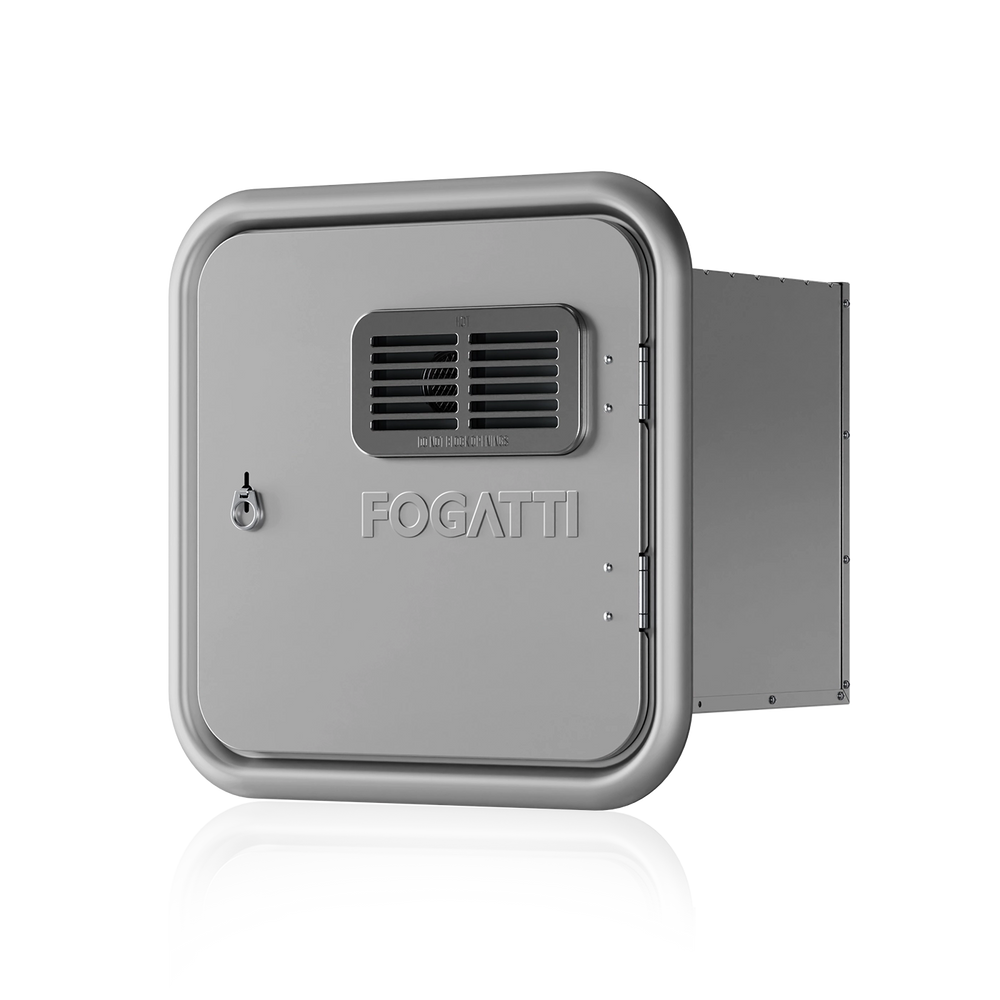
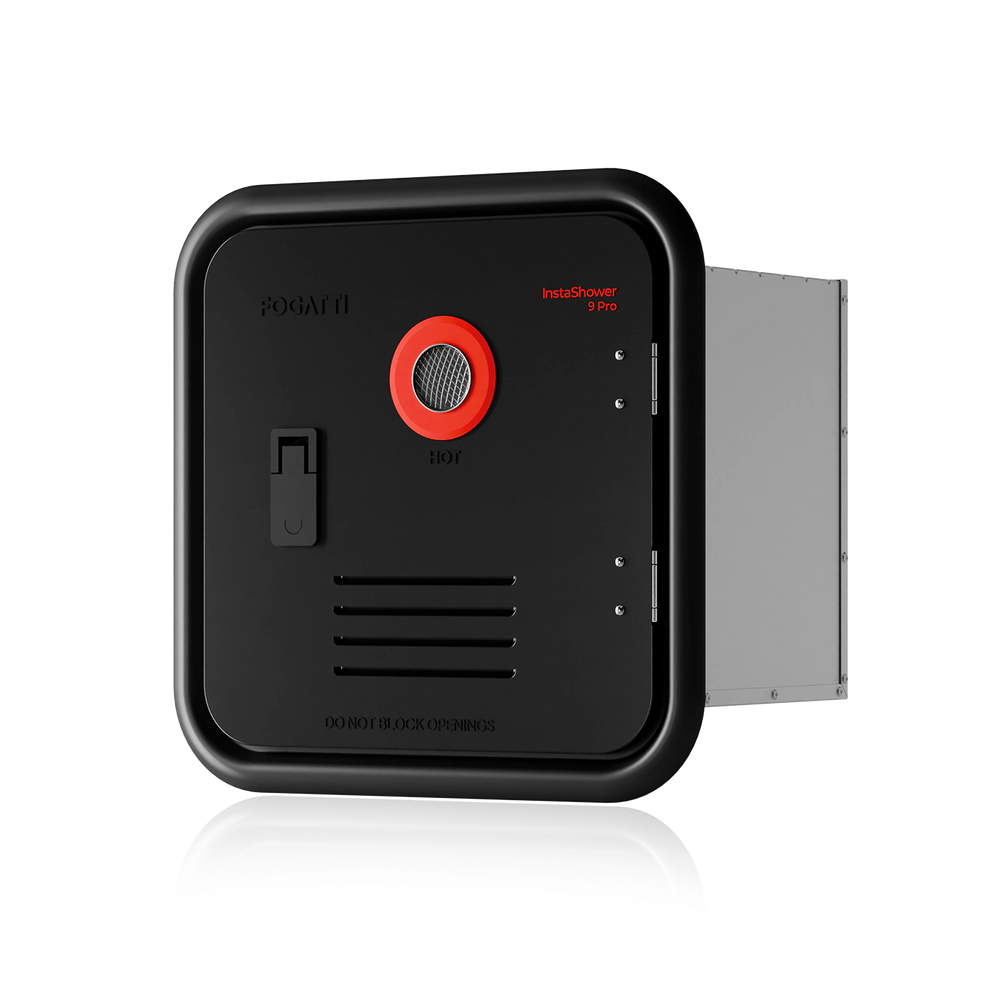
Most quality RV tankless water heaters (including Fogatti units) include a built-in freeze-protection mode that activates automatically when temperatures drop below about 38°F. This feature has two non-negotiable requirements: active 12V power and an active propane supply. If either one fails, the protection shuts off, as noted by RVTravel.com.
Before relying on auto-freeze protection, confirm your 12V battery is healthy. Cold weather reduces battery capacity by 20–50%, according to Black Series RV. A battery that tested fine in October might not have enough capacity to keep your water heater's protection circuit running through a 15°F December night.
Your action steps:
- Keep the water heater powered on and propane flowing during any night when temps will drop below 38°F.
- For storage or any scenario where power loss is possible, winterize with RV antifreeze. Most RVs need 2–4 gallons of RV antifreeze to cover the tankless heater and all plumbing lines.
- Test your 12V battery before departure, not the morning you arrive at camp.
What to Do If You Lose Power Overnight
Auto-freeze protection fails the moment shore power drops out or your battery dies. This is the scenario that catches people off guard. You go to bed with everything running, and a tripped breaker or dead battery at 3 a.m. leaves your water heater exposed for hours.
Build a pre-trip protocol around this risk. If there is any chance of extended power loss (boondocking without reliable solar, aging batteries, or unreliable shore power hookups), drain and blow out the water heater before bed. It takes 10 minutes and costs nothing.
Consider carrying a portable 12V battery bank as a backup power source. It can keep the water heater's ignition board and freeze-protection circuit alive if your house batteries fail. And remember: freeze damage is explicitly excluded from most RV warranties when the unit was unattended or without power. The manufacturer will not cover it, and neither will most insurance policies without a fight.
Pillar 2: Sizing and Running Your RV Furnace for Sub-Freezing Nights
Your LP furnace is the backbone of cold-weather RV camping, but not all furnaces are created equal. The key question is whether yours has enough output for the conditions you're heading into.
Here is the sizing formula: for cold climates (sub-freezing overnight lows), you need 45–60 BTU per square foot of living space, according to RV Trader. For mild weather, 25–30 BTU per square foot is sufficient. A 300-square-foot travel trailer needs 13,500–18,000 BTU in mild conditions, but that range falls short when it's 15°F outside. You'd need closer to 18,000 BTU at minimum — and ideally more.
For serious cold-weather camping, furnaces rated 35,000–42,000 BTU are recommended. A 30,000 BTU furnace is generally considered the minimum for effective heating at freezing temperatures.
Keep in mind that most RV furnaces are only about 60% thermally efficient. A significant portion of the heat generated exits through the exhaust flue rather than into your living space. That 30,000 BTU rating delivers roughly 18,000 BTU of usable cabin heat.
Now, the propane math. A 30,000 BTU furnace burns approximately 0.33 gallons of propane per hour at full output. On a hard-cold night, that adds up to 3–5 gallons total. A 40,000 BTU furnace running at a 60% duty cycle averages roughly 6.3 gallons per day. These numbers matter when planning propane for a multi-night holiday trip.
Beyond cabin comfort, your furnace serves a critical structural function: it pushes warm air through ductwork into the underbelly, protecting your tanks, water lines, and drain valves from freezing. This is arguably its most important cold-weather job, as explained by Bish's RV.
The Electric Space Heater Trap: Why It Can Make Freeze Damage Worse
This one catches experienced RVers off guard. Electric space heaters warm the cabin air effectively, but that warm cabin air satisfies the thermostat and shuts off the LP furnace. When the furnace shuts off, warm air stops flowing into the underbelly.
The result: your cabin feels comfortable at 72°F while your holding tanks, water lines, and gray/black valves sit in ambient freezing temperatures underneath the rig. You wake up comfortable but with frozen plumbing.
The rule is simple: electric space heaters should supplement your LP furnace, never replace it, in sub-freezing conditions. Set your LP furnace thermostat to at least 55–60°F as a baseline, even when running supplemental electric heat. This ensures the furnace cycles on often enough to keep warm air moving through the underbelly ducts.
RV Skirting and Insulation: Locking In the Furnace's Work
RV skirting traps warm air underneath the rig, creating a buffer zone that reduces the furnace's workload and protects underbelly plumbing from direct exposure to wind and freezing air. It is one of the highest-value cold-weather upgrades you can make, as noted by Adventures with Tuck & Nae.
Snap-on fabric skirts or foam board panels are the safest options. Avoid hay bales and OSB; both are flammable and attract rodents and insects. Skirting combined with a properly sized furnace is the most cost-effective cold-weather protection stack for holiday campers.
Even if you cannot skirt the entire rig, covering the windward side provides meaningful protection in windy conditions. Partial skirting is far better than none.
Pillar 3: Keeping Your Propane System Safe and Flowing in the Cold
Here is a fact that surprises many RVers: propane itself does not freeze at any temperature found on Earth. Its freezing point is -306°F. But your propane system, specifically regulators and valves, can ice up due to moisture in the gas stream. When that happens, gas flow gets restricted or blocked entirely.
The bigger concern is pressure. Propane vapor pressure drops significantly as temperatures fall. At 20°F, pressure sits at roughly 47 psi. At 0°F, it drops to about 28 psi. At -20°F, you're down to approximately 13 psi. At -30°F, pressure falls to just 8 psi, according to data shared on Forest River Forums. At those lower pressures, your appliances struggle to get enough fuel to operate properly.
Propane stops vaporizing effectively at -44°F (its boiling point), according to Living the RV Life. In practice, problems start well before that. Cold 20 lb tanks can appear "empty" when they're still half-full because vapor pressure drops too low to sustain appliance demand, as Camping World explains.
This is where the parallel cylinder strategy becomes essential. Running two tanks simultaneously does more than double your fuel supply. It doubles the steel surface area absorbing ambient heat, which significantly improves cold-weather vaporization output, according to Camper Upgrade.
Consider the math: a 30,000 BTU furnace plus a 12,000 BTU water heater running simultaneously creates a combined 42,000 BTU/hr propane draw. That demand can exceed the vaporization capacity of a single cold 20 lb cylinder. Dual tanks are a necessity in winter, not a luxury.
Keep your tanks above half-full at all times during winter camping. In sustained freezing temperatures, a single 20 lb tank used for heating lasts only 2–4 days. Plan your refill stops accordingly.
Preventing Regulator Freeze: The Most Overlooked Cold-Weather Failure Point
Propane regulator icing is one of the most common cold-weather failures, and it mimics an empty tank perfectly. Moisture in the gas stream freezes at the regulator orifice, blocking gas flow. Your tank gauge reads half-full, but nothing comes out.
Two-stage regulators offer a significant advantage here. They reduce pressure in two steps rather than one, generating less temperature drop at each stage and reducing the risk of freeze-up compared to single-stage units.
Prevention steps:
- Install a regulator cover or insulating wrap to retain ambient heat around the regulator body.
- Keep tanks above half-full to maintain adequate vapor pressure.
- Avoid leaving tanks exposed to direct wind; position the rig so the tank compartment is on the leeward side when possible.
One critical safety note: if you find a frosted or iced regulator, never thaw it with an open flame. Use warm (not hot) water or a heat pad designed for the purpose.
Holiday Propane Planning: How Much Will You Actually Burn?
Here is a practical propane budget for a Thanksgiving or Christmas trip in sub-freezing conditions. Your furnace alone will consume 3–5 gallons per night. Add the water heater and cooking, and you're looking at 5–8 gallons per day in hard-cold conditions.
For perspective, winter heating increases total RV propane usage by 5 to 10 times compared to summer camping. A summer trip where you barely think about propane becomes a daily planning exercise in winter.
As a baseline planning rule, carry at least two full 20 lb cylinders (or one 30–40 lb tank) per night of sub-freezing camping. Those 20 lb tanks last only 2–4 days in sustained freezing temps when running the furnace. Map out refill stops along your holiday route before you leave, not when the gauge starts dropping.
The Cold-Weather Battery Check: The Hidden Linchpin of Every System
One thread connects all three systems covered above: your 12V battery. The furnace blower motor, the water pump, and the tankless water heater's ignition circuit all depend on 12V power. Lose that power, and every system fails at once.
Cold weather compounds the problem. Battery capacity drops 20–50% in freezing temperatures. A battery that reads "full" on a warm October afternoon may be functionally half-dead on a 10°F holiday morning. The voltage looks fine, but the available amp-hours are not there when the furnace blower needs them.
Before any winter trip, test your battery's state of health, not just its state of charge. A battery can show 12.6V and still be unable to deliver adequate current if the cells are degraded. For serious cold-weather camping, consider upgrading to lithium batteries. They retain capacity far better in cold temperatures than lead-acid alternatives.
Keep your batteries insulated or in a heated compartment where possible. Confirm your charging system (solar, shore power, or alternator) is keeping up with the increased winter draw from the furnace blower cycling all night.
The compounding failure scenario to watch for: losing 12V power overnight disables the furnace blower and the tankless water heater's freeze-protection mode simultaneously. Your cabin goes cold, your underbelly freezes, and your water heater cracks — all from one dead battery. Test it before you leave.
Your Pre-Trip Cold-Weather Checklist: 10 Steps Before You Pull Out of the Driveway
Print this list. Tape it to your dashboard. Run through it before every cold-weather trip.
- Water heater: Confirm 12V power is healthy and propane is on. Verify freeze-protection mode is active if overnight lows will drop below 38°F.
- Antifreeze supply: Pack 2–4 gallons of RV antifreeze in case of emergency winterization or power loss.
- Furnace BTU check: Calculate your RV's square footage × 45–60 BTU to confirm your furnace is adequately sized for the forecast lows.
- Underbelly heat: Set your LP furnace thermostat to a minimum of 55–60°F. Never rely solely on electric space heaters in sub-freezing conditions.
- Skirting: Install snap-on fabric or foam board skirting before the first freezing night.
- Propane tanks: Fill both cylinders to full before departure. Confirm the dual-cylinder valve is set to draw from both simultaneously.
- Regulator inspection: Check your regulator for moisture or frost. Install a regulator cover. Confirm a two-stage regulator is installed for serious cold-weather use.
- Propane budget: Calculate your nightly propane burn (furnace + water heater + cooking) and identify refill stops along the holiday route.
- Battery health: Test battery state of health. Charge to 100% before departure. Verify your charging system is functional.
- Emergency plan: Know the nearest RV service center along your holiday route and carry RV antifreeze for emergency pipe protection.
This entire walkthrough takes about 30 minutes — a small investment against the $500–$6,000 or more a freeze event can cost.
Stay Warm, Stay Safe, and Enjoy the Holiday Miles
Thirty minutes of pre-trip preparation protects against thousands of dollars in freeze repair costs. More importantly, it protects your holiday. Nobody wants to spend Christmas morning on hold with a mobile RV repair service.
Last winter, 28 million Americans chose RV travel for the holidays. That community is large, experienced, and generous with hard-won knowledge. The tips in this checklist come from real-world failures and fixes that RVers have shared over the years.
If you're unsure whether your water heater or heating setup is adequate for cold-weather use, try our Help Me Choose advisor tool. It walks you through your rig's specs and recommends the right equipment based on how and where you camp. With over 800,000 customers across 80+ countries and more than 20 years as an OEM supplier to brands like Forest River and Gulf Stream, we've seen what works in the cold and what doesn't.
The holiday RV trip is worth doing right. The checklist above is what separates campers who wake up to hot coffee and a warm rig from those who wake up to frozen pipes and a repair bill. Get out there, stay warm, and enjoy the miles.
Sources
- RVIA 2026 Winter Travel Intentions Survey (GlobeNewswire)
- Tool Troopers — RV Water Damage Statistics
- All City Adjusting — Water Damage Claims Statistics 2026 (Verisk Data)
- Unique Camping + Marine — How to Unfreeze RV Pipes and Tanks
- Camping World — How to Winterize an RV Tankless Water Heater
- TanklessGeek — Best Tankless Water Heater for RV Camping
- RVTravel.com — How Do I Keep My RV's On-Demand Water Heater from Freezing?
- Black Series RV — How to Camp Safely in Freezing Conditions
- Fogatti RV Academy — How to Winterize Your RV Tankless Water Heater
- RV Trader — 3 Powerful RV Furnaces to Crank Up the Heat
- RVivy — Best RVs for Winter Travel
- Mortons on the Move — About RV Furnaces
- RJourney — How to Heat an RV in Winter
- Fogatti RV Academy — RV Propane Management Calculator
- Bish's RV — RV Cold Camping Tips
- Adventures with Tuck & Nae — 7 Tips for RVing in Cold Weather
- DebtFreeRVing — Can RV Propane Lines Freeze?
- Forest River Forums — Protecting Propane Gear from Cold
- Living the RV Life — Propane Tanks and Cold Temperatures
- Camping World — Winter RV Camping: What You Need to Know
- Camper Upgrade — Propane Cylinder Cold Output Calculator
- Happy Campers World — Propane vs Diesel: Best Way to Heat Your RV in Winter
- RVIA — 28 Million Americans Plan to Go RVing This Winter (2025)