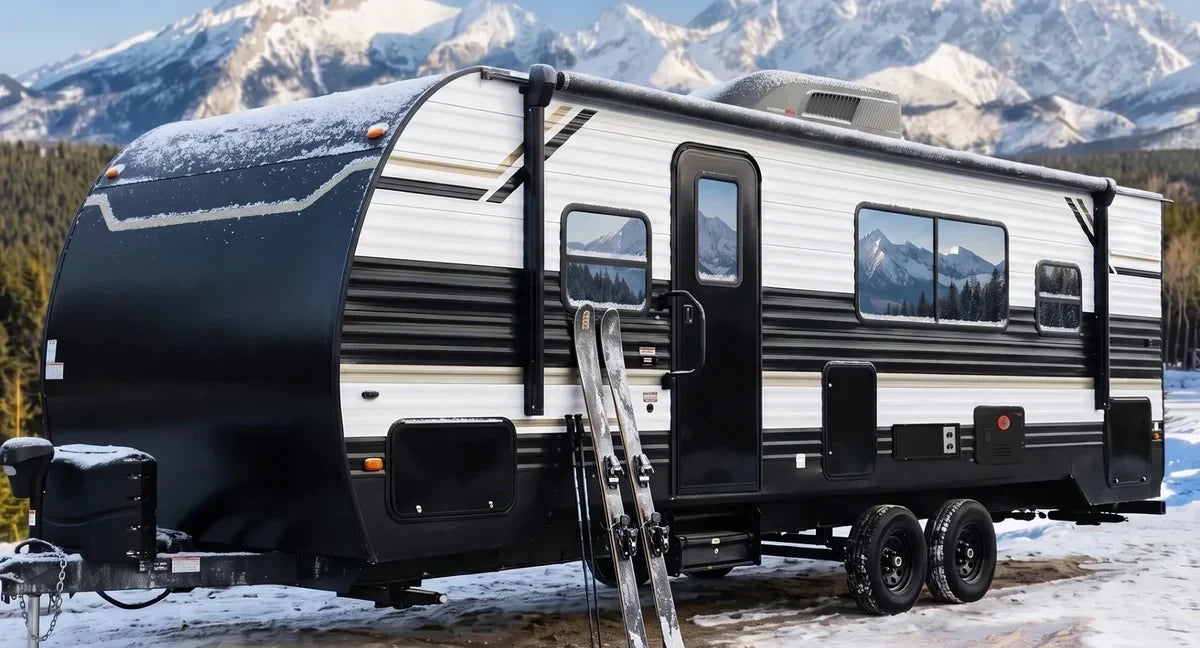




Wiping down wet RV windows can become a daily routine on cold-weather trips. But when moisture keeps collecting around window frames or soaking into nearby trim and fabrics, it can encourage mold growth and damage interior materials over time.
A warm cabin does not necessarily mean the moisture is gone. Heating and moisture removal are two different things, which is why condensation can keep forming even when the RV feels comfortable.
Why RV Windows Get Wet Even With the Heat On
Condensation forms when moist indoor air meets a surface cold enough for water vapor to turn into liquid. During cold weather, window glass and frames can stay much colder than the air inside your RV. The thermostat may show a comfortable temperature while moisture collects on the glass.
An RV furnace warms and circulates cabin air, lowering relative humidity as the air warms without removing the water vapor already indoors. Cold windows can therefore still collect condensation.
A properly installed and operating vented propane RV furnace keeps combustion air and exhaust separate from the cabin. This is different from an unvented propane heater, which releases combustion moisture directly into the indoor space.
If your RV is already warm but the windows remain wet, the next step is to look at moisture sources and ventilation rather than simply raising the thermostat.
Where the Moisture Comes From
An RV is a small living space, so everyday activities can add moisture quickly. Cooking and showering release water vapor, while everyone inside adds more through breathing. Wet towels and clothing continue releasing moisture as they dry.
During cold weather, doors and windows usually stay closed longer to retain heat. With fewer opportunities for moisture to escape, humidity can build up overnight.
Window coverings can hide the result. Closed blinds or insulating covers may limit the warm cabin air reaching the glass, leaving the surface behind them colder. Condensation can then collect along the window or frame without being noticed right away.
Pay attention to when the windows become wet. Condensation after a shower suggests a clear place to improve ventilation; moisture that builds overnight may call for a closer look at humidity throughout the cabin.
How to Reduce RV Condensation
Start by removing moisture where it is produced. Use a kitchen exhaust fan that vents outdoors while cooking, and run the bathroom exhaust fan during and after showers. A recirculating fan moves air around but does not carry water vapor outside.
It may feel wasteful to ventilate while the furnace is running, but keeping the RV tightly closed can trap the moisture collecting on your windows. Use your RV’s ventilation as intended, keep required openings clear, and let the heating system restore the warmth lost during ventilation.
A small hygrometer can help you see whether humidity rises after cooking or builds overnight. There is no single humidity percentage that guarantees dry windows in every RV, because the temperature of the glass matters too. Use the readings alongside what you see on the windows to judge whether your changes are helping.
Allowing cabin air to reach the glass can also help. Open blinds periodically and check behind insulating covers for trapped moisture. Wipe up accumulated water before it soaks into nearby materials. This removes the water already there while you work on the conditions causing it.
If ventilation is not keeping up, a dehumidifier can remove moisture from the air. Choose one suited to your RV’s indoor temperature, with power requirements and a drainage arrangement that work for your setup.
Your RV’s air conditioner may offer another option. Our InstaCool range includes models with a dedicated Dry Mode to help reduce indoor humidity. For cold-weather use, check your model’s operating instructions rather than assuming Dry Mode works across the same temperature range as heating.
When Dampness Needs a Closer Look
Condensation does not always stay on the windows. During longer cold-weather stays, check behind cushions and mattresses that sit against exterior surfaces. These areas may stay colder and receive less airflow than the center of the cabin.
If they remain damp or begin to smell musty, drying the windows alone will not solve the problem. Dry the affected area and look for trapped moisture or limited air circulation.
Not every wet spot is condensation, either. Moisture that appears after rain, leaves staining, or keeps returning around a particular window or roof opening may indicate water intrusion. Condensation and leaks can happen at the same time, so persistent dampness deserves closer inspection.
If wet windows have become part of your morning routine, start by reducing moisture at its source and giving it a way out. Watch how the condensation changes over the next few nights. If one area stays damp or keeps developing a musty smell, take a closer look rather than simply wiping it dry again.