


Your RV AC Was Sized for a Vacationer — Not a Rolling Office
The AC unit on your RV was engineered around 2 to 4 hours of indoor occupancy per day. Park, hike, come back, cool down, sleep. That's the design assumption. It was never built for 8 to 12 hours of continuous presence plus a stack of electronics humming beside you.
According to the Progressive Insurance RV Living Survey, 54% of all RVers are now active remote workers. Among those aged 25 to 34, that number climbs to 70%.
The core problem is physics. Your Starlink dish, laptop, monitor, and networking gear generate 300 to 500 watts of continuous electrical heat — equivalent to running a small space heater inside your rig all day. Every watt of electrical power converts to 3.412 BTU/hr of heat, so a modest 300W workstation adds over 1,000 BTU/hr to your cooling load. That figure doesn't appear on any standard RV AC sizing chart.
This article addresses the two systems most affected by work-from-RV life: your AC cooling capacity and your hot water supply. Both are miscalibrated for full-time use. We'll fix that with real numbers, not weekend-warrior assumptions.
The Invisible Heat Load: What Your Starlink and Laptop Are Actually Doing to Your Rig
Every watt of electrical equipment running inside an enclosed space ultimately becomes heat. A laptop doesn't send its waste energy somewhere else. It radiates it into your RV's cabin, and your AC has to deal with it.
Breaking down the numbers by device: the Starlink Standard Gen 3 draws 50 to 75W during normal operation, with brief spikes up to 100W during satellite acquisition. That's roughly 1.5 to 2 kWh per day on continuous use. The Starlink Mini, by contrast, draws only 20 to 45W in active use and 8 to 12W in standby, consuming roughly 240 to 360Wh over an 8-hour workday.
Stack the full mobile office heat load: a laptop at normal use (30 to 65W) generates 102 to 222 BTU/hr. A 27-inch monitor (30 to 50W) adds another 102 to 171 BTU/hr. A Starlink Standard at peak contributes up to 341 BTU/hr. Add networking gear, and you're looking at 500 to 1,000 BTU/hr of electronics heat alone.
Electronics are only half the story. According to ASHRAE Fundamentals, a seated office worker generates approximately 250 BTU/hr of sensible heat and 200 BTU/hr of latent heat. That latent component (humidity from breathing and perspiration) is almost never discussed in RV AC sizing content, yet it meaningfully affects both comfort and AC performance. Your unit has to remove that moisture, not just lower the temperature.
Combine everything: a solo work-from-RV setup adds 750 to 1,200 BTU/hr of combined electronics and occupancy heat on top of solar gain. Standard sizing charts completely ignore this load.
There's one more factor most people miss: how you power your Starlink also affects how much heat you dump into the cabin. Running Starlink through an AC inverter wastes 20 to 40% of drawn power as heat inside the rig, compared to roughly 4% loss with a 12V direct-wire kit. That inverter heat is a specific, quantifiable addition to your cooling load.
The Inverter Heat Penalty: Why How You Power Starlink Matters for Cooling
The path most RVers use: a 12V battery feeds an inverter, which converts to 120V AC, which feeds the Starlink power brick, which converts back to DC internally. Each conversion step loses energy as heat, and that heat stays inside your rig.
The AC inverter path operates at roughly 78% efficiency, meaning 22% of the power drawn becomes waste heat. A 12V direct-wire kit, by comparison, runs at approximately 96% efficiency. For a Starlink Standard drawing 75W, the inverter path wastes roughly 16 to 20W as heat continuously. That sounds small, but it compounds over an 8-hour workday into meaningful thermal and battery costs.
The practical recommendation is straightforward: if you're boondocking or running solar, a 12V direct-wire Starlink kit reduces both battery drain and internal heat generation simultaneously. It's a dual benefit that pays for itself in comfort and extended off-grid viability.
Worth noting: the 2026 Starlink Eco Mode update allows the dish to enter a sub-5W sleep state during inactivity. For boondockers, this is a meaningful overnight energy saver that also reduces heat generation when you're not working.
How to Size Your RV AC for a Work-From-RV Lifestyle
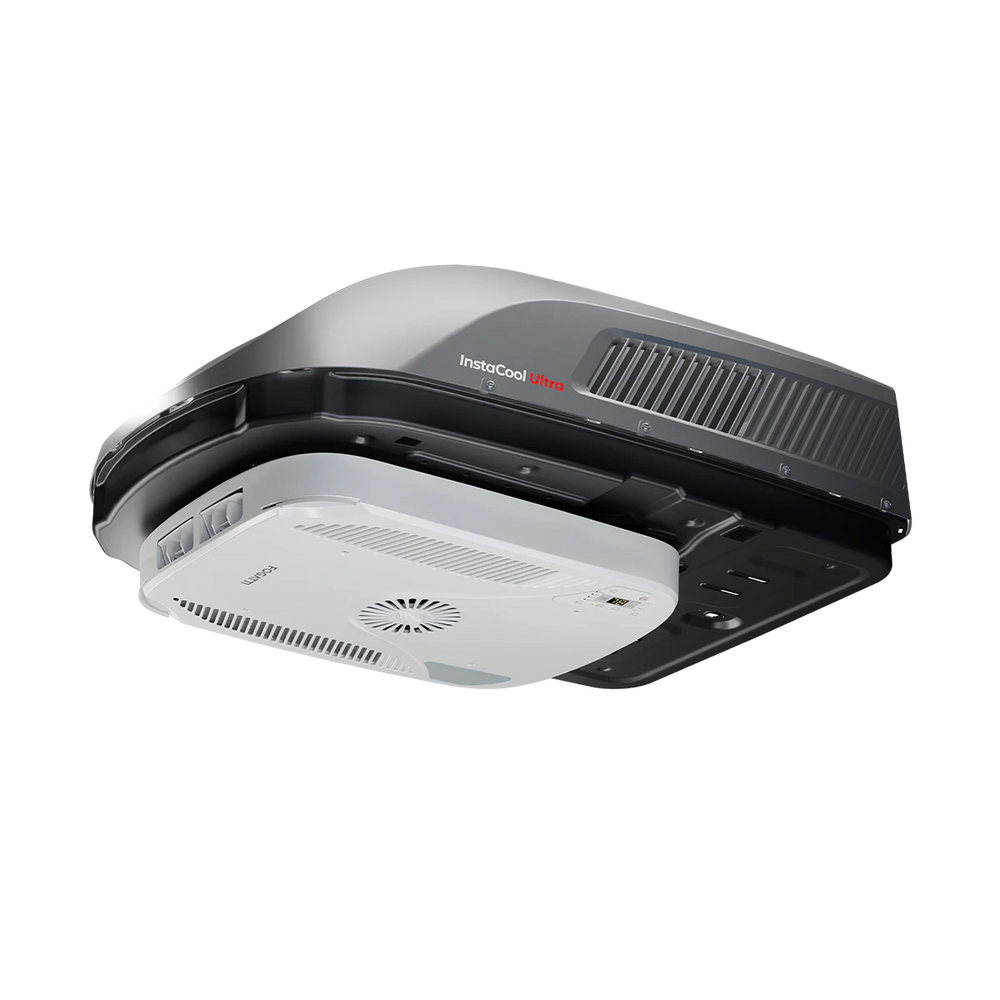
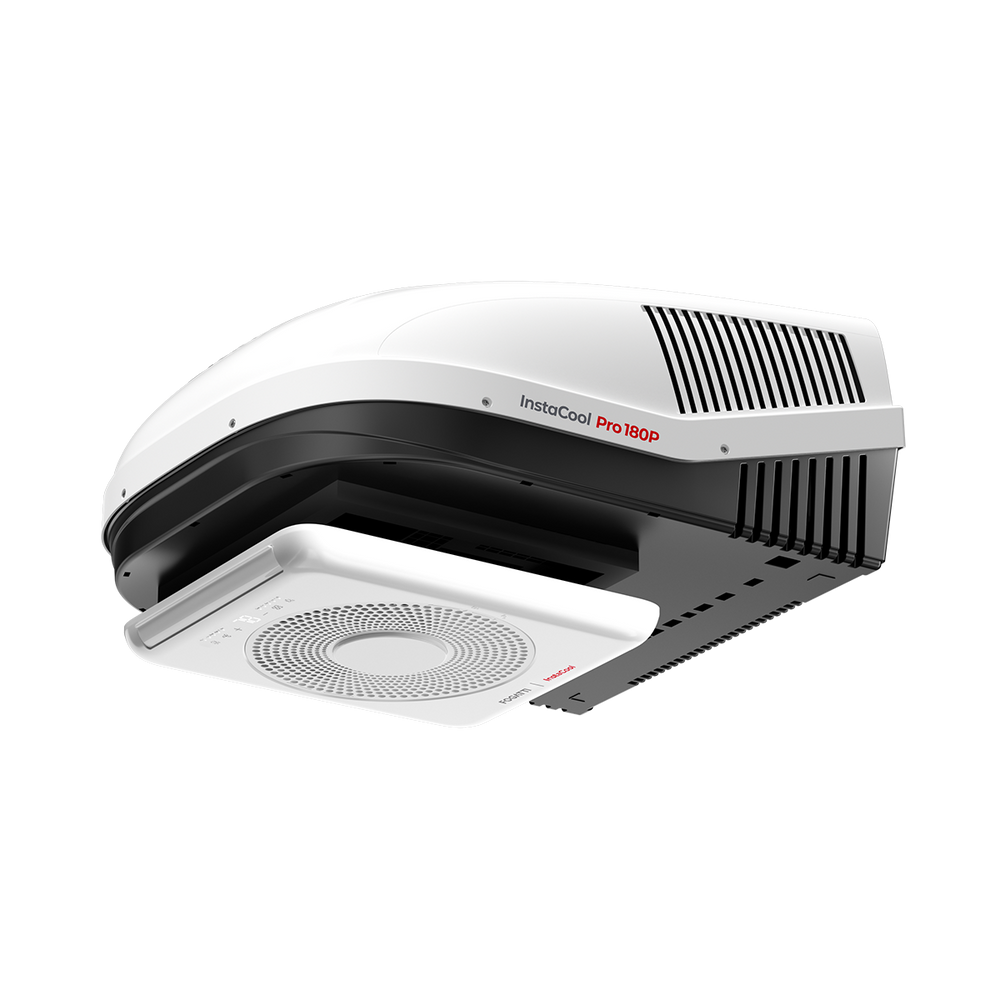
Start with the standard formula. A 13,500 BTU unit covers RVs roughly 22 to 30 feet in length. Above 30 feet, or in rigs with high internal heat loads, 15,000 BTU units or dual-AC setups become necessary.
Now apply the work-from-RV adjustment: add 750 to 1,200 BTU/hr for electronics and occupancy heat to your base BTU calculation. This alone can push a borderline 13,500 BTU rig firmly into 15,000 BTU territory.
For hot climates, the math gets more aggressive. If you're parked where ambient temperatures exceed 95°F (think Arizona, Texas, or Florida), add 30 to 40% to the base BTU calculation. A work-from-RV rig in Phoenix in July faces solar heat gain and electronics heat simultaneously. Standard sizing never accounts for that double hit.
Consider this comparison: a weekend camper in a 28-foot trailer does fine with 13,500 BTU. A full-time remote worker in the same rig, running Starlink and a monitor for 8 hours, needs 15,000 BTU at minimum. If that rig is boondocking with power budget constraints, dual 13,500 BTU units may actually be more efficient than a single larger unit, since they can cycle independently.
That raises the boondocking power challenge. A 1,500W AC unit running off batteries and solar while also powering Starlink and a laptop creates a real power budget conflict. Sizing your AC correctly (and using Starlink Mini plus direct-wire) minimizes AC cycling and extends off-grid viability. According to data from Campground Consulting Group and SolarTechOnline, a full-time couple in a 35-foot fifth wheel with a home office averages 32 kWh/day, peaking at 48 kWh/day in summer. AC alone accounts for 50 to 70% of that load.
One upside: in winter, the seasonal asymmetry works in your favor. The same electronics and occupancy heat that punishes you in summer actually reduces your furnace load in cold climates. Your laptop becomes a supplemental heater. It's a small consolation, but a real one.
Weekend Camper vs. Full-Timer: A Heat Load Comparison
- Weekend Camper: 2 to 4 hours indoor occupancy, no continuous electronics, 13,500 BTU typically sufficient, tank water heater adequate.
- Work-From-RV Full-Timer: 8 to 12 hours occupancy, 300 to 500W continuous electronics, 750 to 1,200 BTU/hr added heat load, 15,000 BTU or dual AC recommended, tankless water heater non-negotiable.
The rig itself is identical. The lifestyle pattern is what changes the required specifications entirely.
Keep in mind that full-time RVers underestimate their actual power consumption by 25 to 40% when relying on estimates alone. That gap between what you think you're using and what you're actually using is where comfort failures happen. It's exactly why the water heater conversation matters just as much as AC sizing.
The Hot Water Demand Reset: Why Full-Timers Need to Rethink Their Water Heater
The tankless vs. tank debate needs to be reframed entirely for work-from-RV households. If you're home all day, you use hot water on a residential schedule: morning shower, lunch dishes, afternoon handwashing, evening cleanup. That's not a camping pattern. That's a household pattern.
A traditional 6-gallon RV tank water heater provides only 6 to 10 gallons of hot water before requiring a 30 to 60 minute recovery wait. For a household where two people shower, cook, and clean across a full day, that recovery time creates constant interruptions. Back-to-back showers from a 6-gallon tank simply aren't possible without a wait.
The numbers tell the story. An RV shower requires 1.5 to 2.0 GPM at a 77°F temperature rise for comfortable hot water. A tank heater can't sustain that flow for two consecutive showers, let alone handle the unpredictable demand spikes that come with being home all day.
The full-timer recommendation is clear: tankless water heaters rated 3.6 to 3.9 GPM with 65,000 BTU output support back-to-back showers, kitchen cleanup, and the kind of unpredictable peak demand that comes from people who are home and working all day. Full-timers shower at varied times (not just mornings), run dishes mid-day, and may have guests. A tank heater simply cannot adapt to that pattern. A tankless unit delivers on-demand hot water regardless of timing.
There's also a connection to the broader energy picture. A tankless water heater eliminates standby heat loss from a constantly heated tank. That standing tank radiates heat into your RV's interior, adding (in a small but real way) to your AC's cooling burden. Removing that passive heat source is yet another reason tankless makes sense for full-timers.
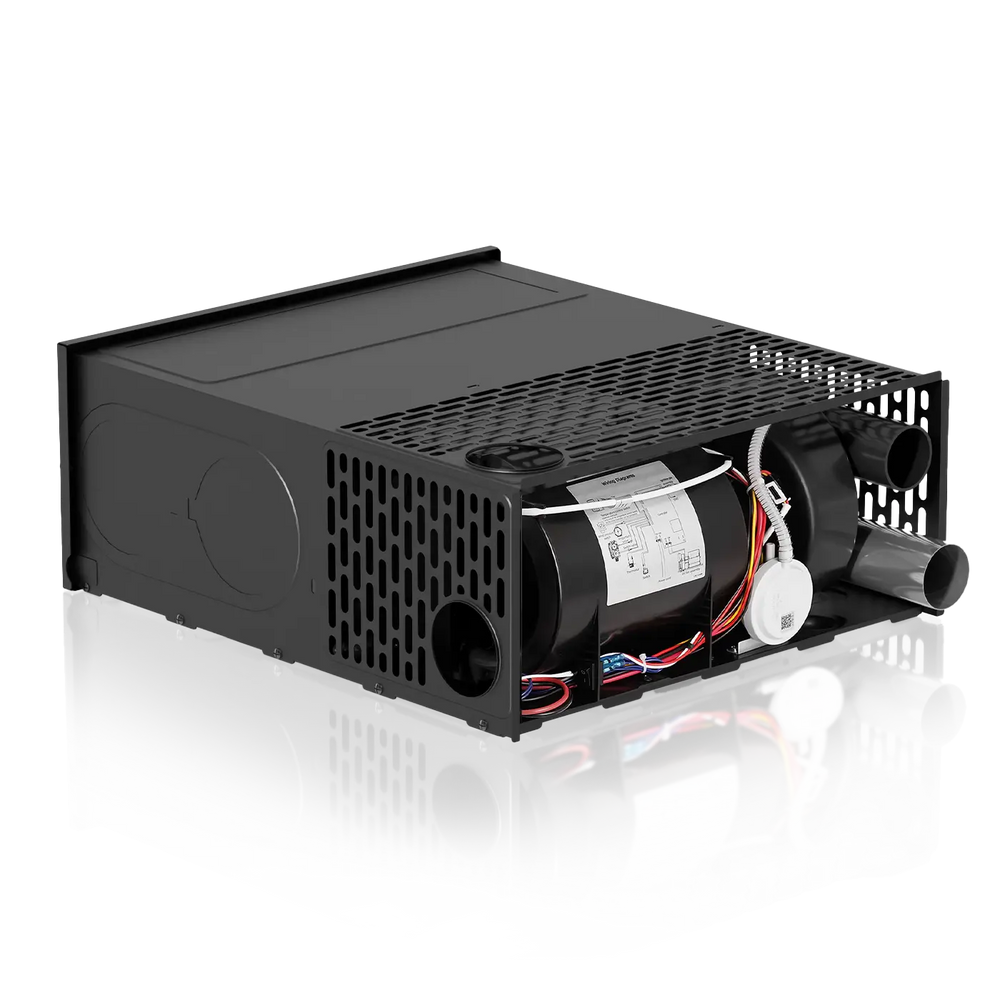
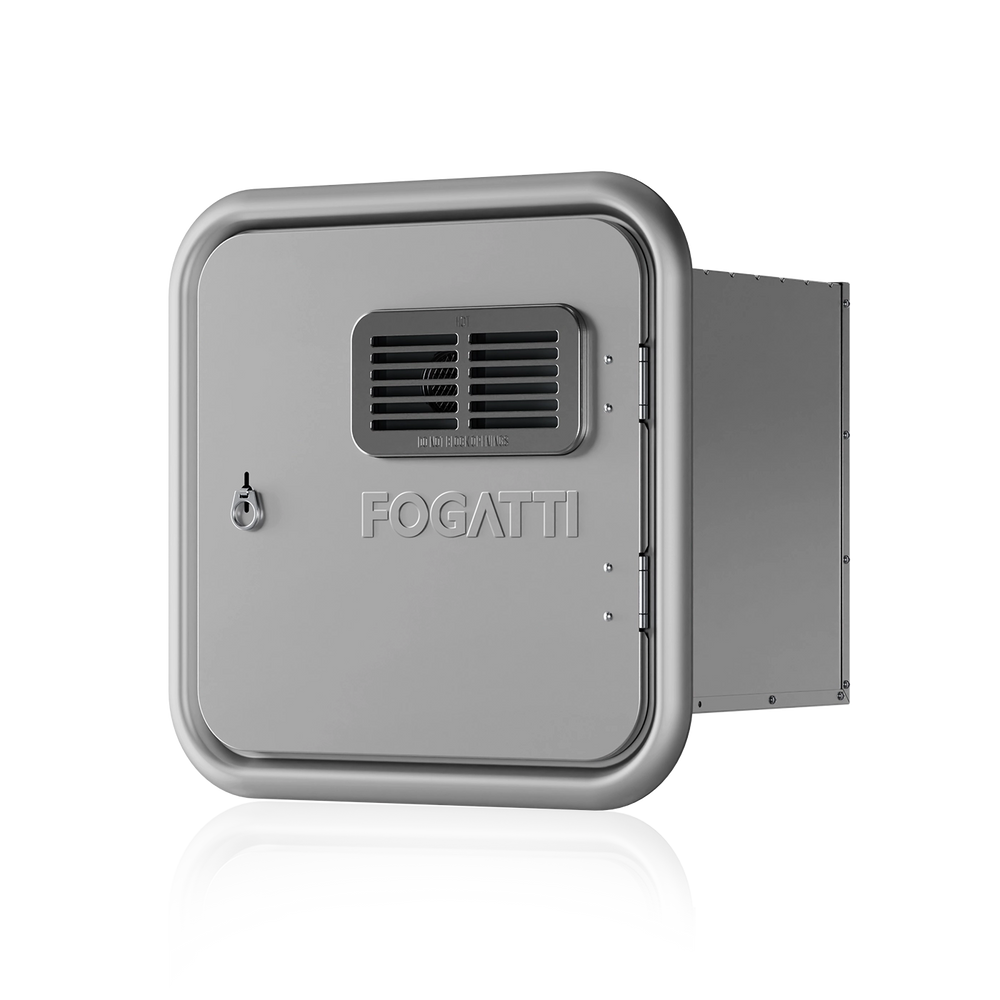
Fogatti's RV tankless water heater lineup, rated 3.6 to 3.9 GPM with 65,000 BTU output, is purpose-built for exactly this kind of full-time use. As an OEM supplier to leading RV manufacturers including Forest River and Gulf Stream, Fogatti engineers these units with the same specifications that go into factory-installed systems on new rigs. The Help Me Choose advisor tool on the Fogatti website matches the right unit to your rig size and household size, removing the guesswork from the upgrade.
Sizing Your Tankless Water Heater for a Work-From-RV Household
A practical sizing framework: a solo full-timer can typically get by with a 3.6 GPM unit. A couple, or any household with variable demand patterns (guests, kids, or unpredictable schedules), should look at 3.9 GPM with 65,000 BTU output.
BTU output matters more than gallon capacity for full-timers. BTU determines how fast the unit heats incoming cold water at your flow rate. This is critical in northern climates where groundwater temperatures are colder and require a larger temperature rise to reach comfortable shower temps.
For boondockers, propane tankless units are the clear choice because they don't draw significant electrical power. That preserves the battery budget already strained by Starlink, your laptop, and AC. Fogatti's tankless units carry a 2-year warranty with free shipping, reducing the risk of upgrading from a tank unit mid-journey. With over 800,000 customers across 80+ countries and more than 20 years of engineering experience, the sizing recommendations behind these units are grounded in real-world field data, not theory.
Building Your Work-From-RV Power and Comfort Budget: A Practical Checklist
Here's everything consolidated into a daily energy budget you can actually plan around.
Daily electronics load:
- Starlink Mini: 240 to 360Wh (or Starlink Standard: 1.5 to 2 kWh)
- Laptop + monitor + networking gear: 800 to 1,000Wh total
Climate control:
- AC running 8 hours: 12 to 28 kWh depending on BTU rating and cycling
Water heating:
- Propane tankless: minimal electrical draw (ignition and control board only)
For boondockers, the Starlink Mini paired with a 12V direct-wire kit is the lowest-heat, lowest-power option available. It saves battery and reduces your cooling load simultaneously.
Whatever numbers you come up with, add a 25 to 40% buffer. Analysis from year-round RV installations across North America consistently shows that full-timers underestimate actual usage by that margin.
AC sizing decision tree:
- Rig under 28 ft with a light office setup: 13,500 BTU may suffice
- 28 to 35 ft or heavy electronics load: 15,000 BTU
- Above 35 ft or parked in Sun Belt summers: dual AC or 15,000 BTU plus strategic shading and ventilation
Water heater decision: If you work from your RV more than 3 days per week, a tankless unit rated 3.6+ GPM is a functional necessity, not a luxury.
Use Fogatti's Help Me Choose advisor tool to get a personalized recommendation based on your specific rig, climate zone, and usage pattern. It takes a few minutes and removes the guesswork.
With approximately 486,000 Americans living full-time in RVs and projections suggesting 30% of RV owners could work full-time from their rigs by 2026, the infrastructure inside the rig needs to match the lifestyle. The appliances that worked for weekend trips aren't built for what you're asking them to do now.
Size for the Life You're Actually Living
The RV industry sized its appliances for vacationers. The work-from-RV movement has fundamentally changed the thermal and hot water load profile inside the same rigs. The rig didn't change. Your life inside it did.
The two highest-impact comfort investments for full-timers are a right-sized AC (15,000 BTU or dual units for most mobile office setups) and a tankless water heater (3.6 to 3.9 GPM, 65,000 BTU). These aren't luxury upgrades. They're the baseline for a rig that actually supports the way you live and work.
The numbers tell a clear story. An estimated 18 million digital nomads and 486,000 full-time RV residents are rewriting what "home" means. Their appliances should reflect that reality.
Use Fogatti's advisor tool to match the right units to your rig. Share your own work-from-RV setup with the community. Stop sizing your rig like a weekender when you're living in it full-time.
Getting the sizing right means fewer hot-weather breakdowns, no cold showers between Zoom calls, and a rig that genuinely supports the life you've chosen to live. That's not aspirational. That's just good engineering.
Sources
- Progressive Insurance — RV Living: What's Fueling the Changing RV Landscape
- We Must Be Geeks — Best Starlink Plans for Full-Time RV Living in 2026
- VanPowerCalc — Starlink Van: Real Power Draw & Battery Impact (2026)
- Trailerite — 2026 RV Starlink 12V Direct-Wire Kit Guide
- AndroidExperto — How Many BTUs Do Our Computers Produce?
- HVAC Calculators — Equipment Heat Load Calculator (ASHRAE Reference)
- Motorsports Land — AC for RV: The 2026 Buyer and Owner Guide
- RV AC Unit — Best RV Air Conditioner Size Calculators
- SolarTechOnline — How Much Electricity Does An RV Use? Complete 2025 Guide
- SolarTechOnline — How Much Electricity Does A Camper Use? Complete 2025 Guide
- Backup Power Hub — Full-Time RV Living Power Guide
- Heater Advisor — Best Hot Water Heater for RV 2026
- Tankless Geek — Best Tankless Water Heaters for RVs & Camping 2026
- Fogatti — How to Choose the Right Size Tankless Water Heater for Your RV
- RV Brands — What % of RVers Are Full-Time? (2026 Stats)
- RV Journal — Setting Up An RV For Remote Work In 2026
- Innowave Studio — Trends in the U.S. RV Park and Resort Sector for 2025–2026