


Why Most Boondockers Run Out of Propane by Night Four
Three propane appliances fighting over one tank, no generator to fall back on, and no rationing plan. It happens more often than you'd think. About 53% of campers now prefer boondocking or camping without hookups, yet most head out with no propane management strategy at all.
The fix starts with a simple framework we call the propane hierarchy: manage the furnace first (it's the biggest consumer by far), optimize the water heater second, and let the cooktop take care of itself. This article walks you through building a self-sufficient 7-day kit organized around your propane system, not your solar panels or battery bank.
Know Your Numbers: Propane Consumption by Appliance
The Furnace: Your Biggest Propane Expense
A typical 30,000 BTU/hr RV furnace burns through roughly 1 gallon of propane every 3 hours at full load. At a 40% duty cycle over an 8-hour night, that works out to about 1.05 gallons per night. To put that in perspective, running your furnace for 8 hours uses as much propane as a propane refrigerator consumes in nearly a full week. Furnace management is the single biggest lever you have.
The Water Heater: Tank vs. Tankless
A conventional 6-gallon tank water heater cycling 2 to 4 hours per day uses roughly 0.20 to 0.40 gallons of propane daily. A tankless unit fires at 35,000 to 60,000 BTU/hr, which sounds aggressive, but it only burns propane while water is actually flowing. The result: tankless water heaters save an estimated 30 to 50% on propane compared to tank models that maintain standby temperature around the clock. Over a full week, that difference adds up fast.
The Cooktop: Surprisingly Low Impact
Each cooktop burner uses about 0.15 lbs of propane per hour. A 30- to 60-minute meal is the lowest-impact propane event in your entire day. Focus your conservation energy on heating and hot water, not cooking.
The Cold Weather Reality Check
When temperatures drop, heating alone can consume 2 to 4 gallons per day. At that rate, a standard 30 lb tank (roughly 7 usable gallons) is empty in 2 to 3 days. Without a conservation plan, you're packing up by Wednesday morning.
The Hidden Double Threat: Propane AND Battery Drain
Most boondocking guides treat propane and battery management as separate problems. They're not. Your RV furnace blower fan draws 35 to 50 amp-hours of battery power per day. Heavy furnace use drains both your propane tank and your battery bank simultaneously. For generator-free boondockers with a 100Ah lithium bank, that combination can leave you stranded in under two days.
This is why we recommend a "propane-first, battery-second" philosophy: use propane for all heat applications and preserve your battery bank for lighting, the water pump, and electronics. Those are the systems that keep your rig livable when the sun isn't shining.
One of the most effective tools here is a catalytic heater like the Olympian Wave-6. These units use 0.3 to 0.5 gallons of propane per day compared to 0.8 to 1.2 gallons for a forced-air furnace, and they consume zero battery power. That's a dual conservation win: less propane burned and zero draw on your battery bank. Pairing a catalytic heater with your existing furnace can cut propane consumption by 60% or more on moderate-cold nights.
Building Your 7-Day Propane Kit: Hardware Essentials
Two-Stage Regulator
This is non-negotiable. A two-stage regulator reduces tank pressure from 100 to 250 PSI down to 11 inches of water column (0.4 PSI), the only pressure at which RV appliances are designed to operate. Over a 7-day trip, as your tanks deplete, a two-stage regulator maintains consistent delivery where a single-stage unit would start starving your appliances.
Dual-Tank Automatic Changeover Regulator
A dual-tank auto-changeover regulator switches from your primary tank to your reserve tank without interrupting appliance operation. No waking up at 2 a.m. to a freezing rig because tank one ran dry. For week-long boondocking, this piece of hardware is the difference between a minor inconvenience and a trip-ending problem.
The 80% Fill Rule
Propane tanks must only be filled to 80% capacity. The remaining 20% is required vapor space. A 30 lb tank holds about 7 usable gallons, not 8.5. Overfilling sends liquid propane into the regulator, which can damage your system and cause dangerous pressure spikes. Always confirm your tanks are filled correctly before heading out.
Tankless RV Water Heater
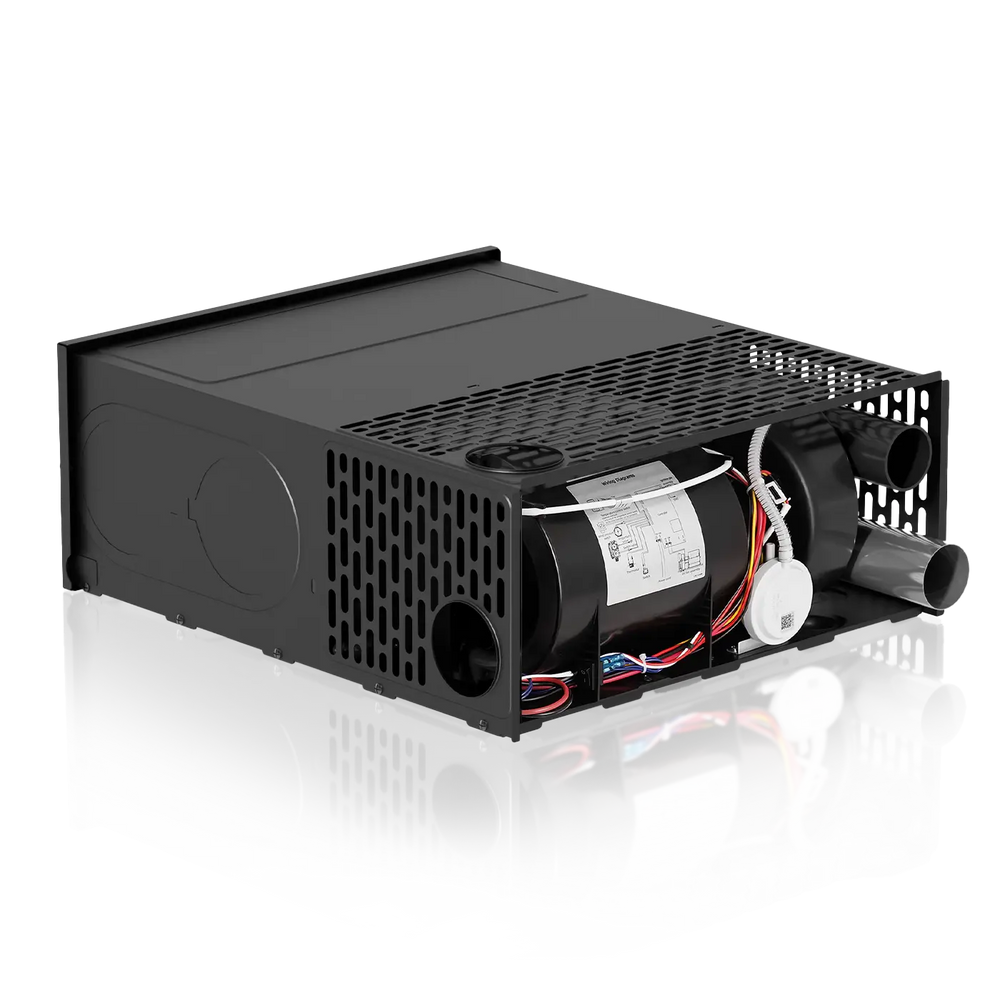
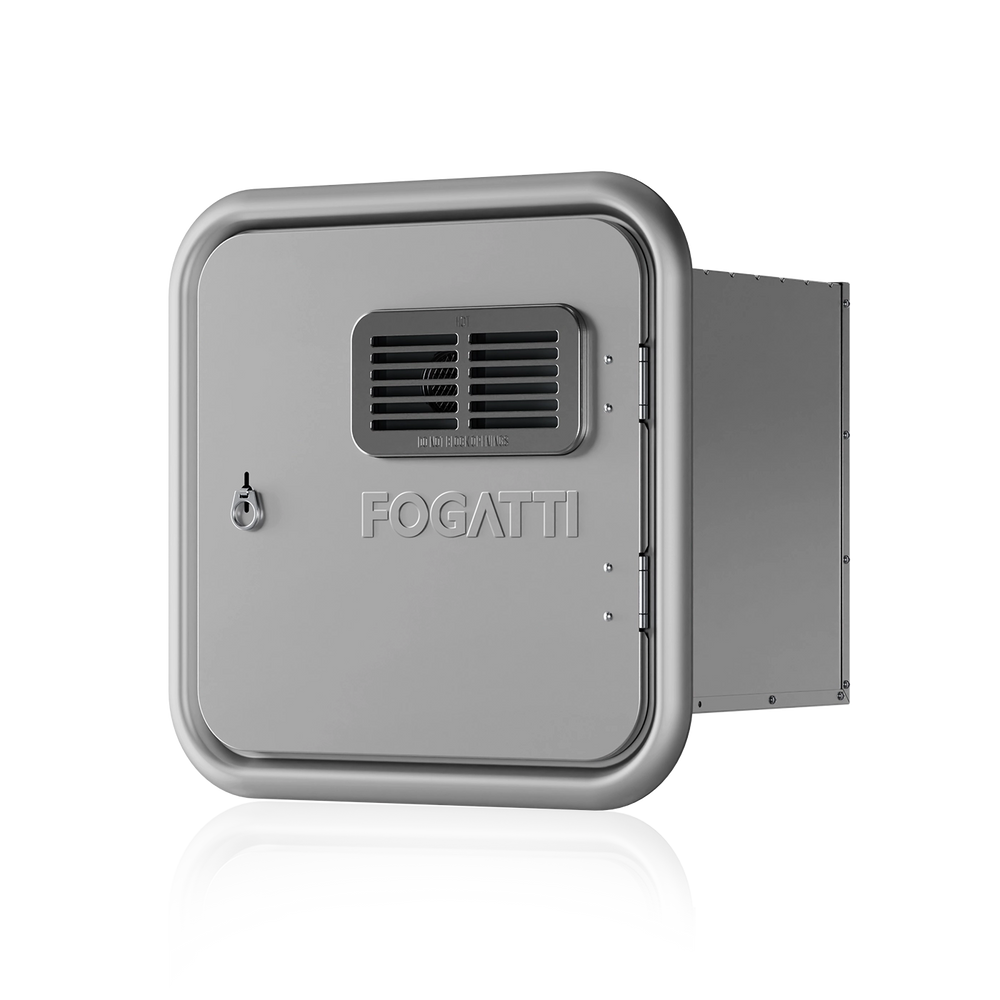
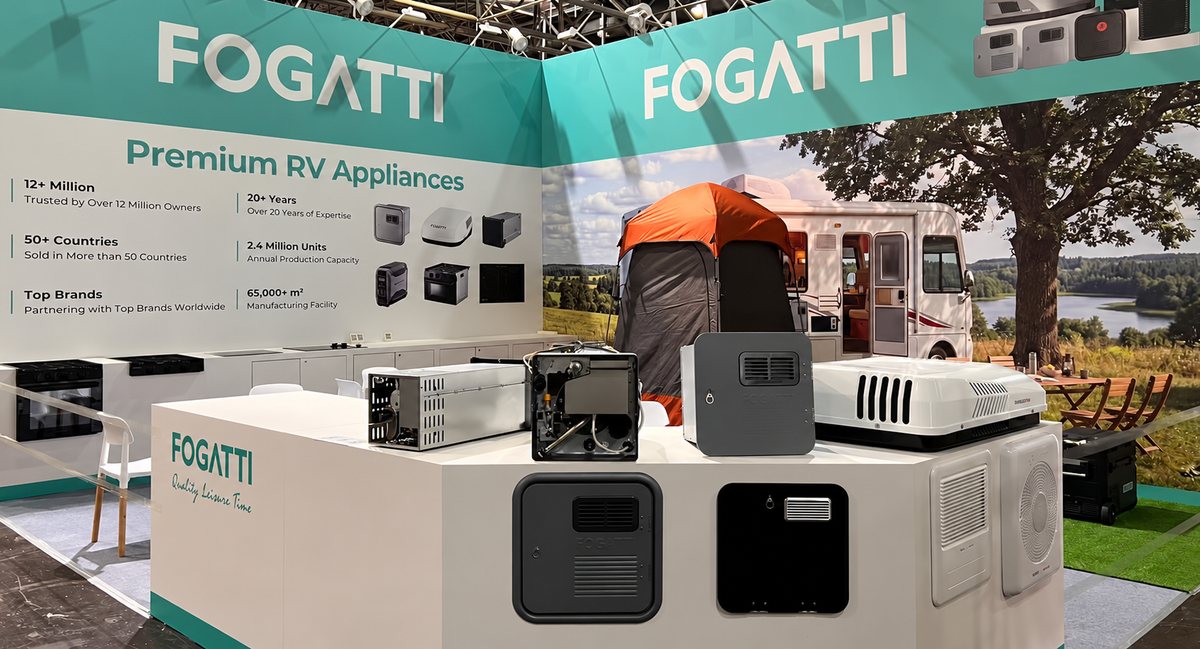
A tankless water heater fires on demand only, saving 30 to 50% on propane versus tank-style heaters. These units also last 20-plus years, roughly double the lifespan of most storage tank models. As an OEM supplier to leading RV manufacturers like Forest River and Gulf Stream, Fogatti has engineered its tankless water heaters specifically for the demands of off-grid RV use, where every fraction of a gallon of propane counts.
Pre-Trip Inspection Checklist
- Check regulator age and vent orientation
- Perform a leak test on all connections
- Inspect pigtail hoses for cracks or wear
- Confirm both tanks are filled to 80%
Altitude and Cold: Two Variables That Wreck Your Propane Budget
At elevations above 5,000 ft, propane appliances burn 10 to 15% less efficiently due to lower air density. A furnace rated at 30,000 BTU/hr may only produce around 25,500 to 27,000 BTU/hr at 7,000 ft, meaning longer run times and more propane burned to reach the same temperature.
Regulator performance also degrades, roughly 10% per 5,000 feet of elevation gain. At 10,000 ft (common in Rocky Mountain and Sierra Nevada boondocking spots), your appliances risk incomplete combustion and carbon monoxide production. This is a safety issue, not just an efficiency issue.
Cold temperatures compound the problem. Low ambient temps reduce propane tank vapor pressure, which lowers flow rate and further reduces appliance output on the coldest nights, exactly when you need heat the most.
The practical fix: add 15 to 20% to your propane reserve estimate for every trip above 5,000 ft, and plan for longer furnace cycles in sub-freezing conditions. If you're heading to high-desert or mountain boondocking sites, this buffer can be the difference between a full week and an early retreat.
Behavioral Conservation: The Free Propane You're Leaving on the Table
Hardware gets you 80% of the way there. Behavior gets you the rest. These adjustments cost nothing and compound meaningfully over seven days.
- Cook with a lid. It reduces propane use by up to 20%. Use wind guards around outdoor burners to prevent heat loss.
- Take navy showers. Wet, off, soap, rinse. This dramatically reduces hot water draw, cutting tankless water heater firing time and propane consumption per shower.
- Batch cook. Preparing multiple meals in one session reduces total burner-on time across the week.
- Stagger appliance use. Running the furnace, water heater, and cooktop simultaneously causes pressure drops at the regulator, reducing performance across all three. Use one major appliance at a time whenever possible.
- Manage moisture. Burning 1 gallon of propane produces approximately 1 gallon of water vapor indoors. Crack a vent when running the furnace or a catalytic heater to prevent condensation and maintain air quality inside your rig.
Your 7-Day Propane Budget: A Simple Planning Framework
Mild Shoulder-Season Scenario
Furnace at 40% duty cycle: ~1.05 gal/night. Tankless water heater: ~0.25 gal/day. Cooktop: ~0.10 gal/day. That totals roughly 1.40 gallons per day, or about 9.8 gallons for a full week. You'll need just over two 30 lb tanks to cover it comfortably.
Cold-Weather Scenario
A higher furnace duty cycle pushes consumption to 2 to 3 gallons per day. Over seven days, that's 16 to 23 gallons total. You'll need three 30 lb tanks or a 40 lb plus 30 lb dual-tank setup to stay covered.
Key Planning Rules
Never count on more than 80% of your tank capacity. Always carry a reserve tank with your dual auto-changeover regulator in place. Heading above 5,000 ft? Add that 15 to 20% altitude buffer on top of your baseline estimate.
Smart Monitoring
Bluetooth-enabled tank level sensors and energy management systems are now standard on 57% of premium off-grid RV launches. These tools give you real-time consumption data so you can catch overuse before day four, not after. The off-grid RV market is projected to grow from $451 million in 2026 to $968 million by 2035. Propane system planning is becoming a core RV skill, not an edge-case hobby.
Run a Full Week Off-Grid Without Running Out
The propane hierarchy keeps it simple: manage the furnace first (supplement with a catalytic heater when possible), optimize the water heater second (go tankless, practice navy showers), and let the cooktop take care of itself. The right hardware — a two-stage regulator, dual-tank auto-changeover, and a tankless water heater — forms the foundation. Behavioral conservation multiplies its impact.
Remember: altitude and cold add 15 to 20% to any propane estimate. Always build that buffer into your kit before you leave the driveway.
If you're not sure which tankless water heater fits your rig's propane system and boondocking style, try Fogatti's Help Me Choose advisor tool. It matches you to the right unit based on your setup, your travel habits, and your climate.
With 53% of campers now preferring boondocking, mastering your propane system is what separates a two-night trip from a full week of freedom. Build the kit, do the math, and go find a spot worth staying at.