


Why Your RV Water Heater Only Leaks When It's Running
If your RV water heater is bone dry when cold but starts dripping the moment you fire it up, you're looking at a pressure symptom, not a hardware failure. The timing itself is your best diagnostic clue.
RV water systems are closed systems. When the heater warms water from 50°F to 130°F, that water expands. In a sealed system, it has nowhere to go. Pressure climbs until something gives: a valve opens, a fitting weeps, or a connection starts to drip.
This differs from a static leak, which shows up whether the heater is on or off. If your leak disappears when the heater is cold, you're in the right place. The three most common root causes are thermal expansion pressure, heat-induced fitting expansion, and check valve backflow. A fix that costs $400 now can balloon to $2,000 in six months if water damage spreads unchecked.
Step 1: Pinpoint the Exact Leak Location Before You Touch Anything
Before you start replacing parts, know exactly where the water is coming from. Grab a towel and dry the entire water heater compartment thoroughly. Then turn on the heater, wait, and watch. The first wet spot you see is your source.
There are four possible leak origins to check:
- The T&P (Temperature and Pressure) relief valve discharge tube
- Threaded fittings at the hot water outlet
- The drain plug
- The tank body or heat exchanger itself
Run an important diagnostic split next. Does the leak only appear when you're connected to city water at the campground? If so, supply pressure is your primary suspect. If the leak also shows up when running on the onboard pump alone, the cause is internal thermal expansion.
Here's a step most RV owners skip: attach an inline pressure gauge to your city water inlet before connecting to a campground hookup. According to Happy Campers World, campground pressure can spike well above 100 PSI, far exceeding the 40–60 PSI safe range for RV plumbing. Pressure above 60 PSI can prematurely activate the T&P relief valve and stress fittings during every heating cycle.
A $12 gauge can save you hundreds. Don't skip this step.
The T&P Relief Valve: The Most Common Run-Time Leak Source
T&P valve issues account for roughly 30% of new water heater leaks, according to plumbing service diagnostic data. These valves are rated to open at 150 PSI or 210°F, and they're doing exactly what they're designed to do when they release water during a heating cycle.
Standard tank-style RV water heaters from Suburban and Atwood/Dometic are built with an air pocket at the top of the tank. This pocket acts as a cushion: when water expands, it compresses the air instead of spiking pressure. That air pocket can be lost over time, especially if the T&P valve is opened while the water supply is on. Once the cushion is gone, pressure has nowhere to go except through the valve.
How to Restore the Air Pocket
- Shut off the water supply (city or pump).
- Open a hot water faucet inside the RV.
- Open the T&P valve briefly to release pressure.
- Close the T&P valve.
- Slowly restore the water supply.
The trapped air re-establishes the expansion buffer. This simple, free procedure resolves the majority of T&P drips, yet it's rarely explained in most troubleshooting guides.
There's a catch. Once a T&P valve has activated or been manually opened, mineral scale on the valve seat commonly prevents it from fully reseating. The result is a persistent drip that stops only when the heater cools and pressure drops. If the valve continues to weep after you've restored the air pocket, replace it. T&P valves are inexpensive and should not be reused after activation.
One more factor to keep in mind: cold inlet water (around 40°F in winter) heated to 130°F creates a much larger pressure spike than warm summer water going through the same cycle. That's why run-time T&P leaks are far more common during cold-weather camping.
Heat-Induced Fitting Expansion and Freeze Damage Cracks
Not every run-time leak comes from the T&P valve. PEX-to-threaded brass fittings at the hot water outlet physically expand when heated. A fitting that holds perfectly at cold temperatures can open a micro-gap once it reaches operating temperature. The leak appears, you shut the heater off, the fitting contracts, and the drip stops. It's maddening if you don't know what to look for.
The highest-risk connection points are:
- PEX crimp fittings at the heater inlet and outlet
- SharkBite-style push fittings, which fail pressure tests earlier than crimp fittings
- Threaded brass adapters at the heater connections
Freeze damage is a major secondary cause. Micro-cracks from ice expansion in a fitting or valve body can be too small to leak under cold static pressure, but under the higher dynamic pressure of a heating cycle, those cracks open up. This makes post-winterization the highest-risk period for run-time leaks. If you're pulling your rig out of winter storage and notice drips only when the heater runs, freeze damage is a strong suspect.
To inspect, run the heater to full operating temperature and press a dry paper towel against each joint. Even the smallest drip will show. If you find a SharkBite fitting in the heater compartment, consider replacing it with a properly crimped PEX fitting or a brass compression fitting rated for hot water service.
Fresh water leak diagnosis and repair at an RV shop runs $180–$650, depending on how deep the technician has to trace the leak. A DIY fitting inspection is well worth the effort before scheduling service.
Check Valve Failure and the Backflow Pressure Trap
The check valve on your RV water heater prevents hot water from backflowing into the cold supply line. When it sticks open or fails entirely, heated water pressurizes the entire cold side of the system. The result: hot water comes from the cold tap, or leaks appear at cold-side fittings only after the heater has been running.
Here's a quick field test. Shut off the water supply, open a cold faucet, and feel the water temperature. If it runs warm after the heater has been on, your check valve is not seating properly.
Replace a failed check valve immediately. The resulting pressure buildup stresses every fitting in the system and can trigger T&P valve activation on top of the original problem, compounding your leak sources.
Tankless RV Water Heaters: A Different Leak Profile
Tankless units have no storage tank to corrode, so water inside the compartment almost always traces to fittings, a valve, or the heat exchanger, not a rusted shell. According to FastWaterHeater, this distinction is critical for narrowing your diagnosis.
On a tankless unit, inspect these points in order:
- Inlet and outlet fittings under thermal stress
- The heat exchanger body and its connection ports
- The flow sensor housing
Because tankless heaters fire on demand and reach operating temperature faster than tank-style units, fitting expansion stress cycles happen more frequently. Proper crimp connections are especially important here.
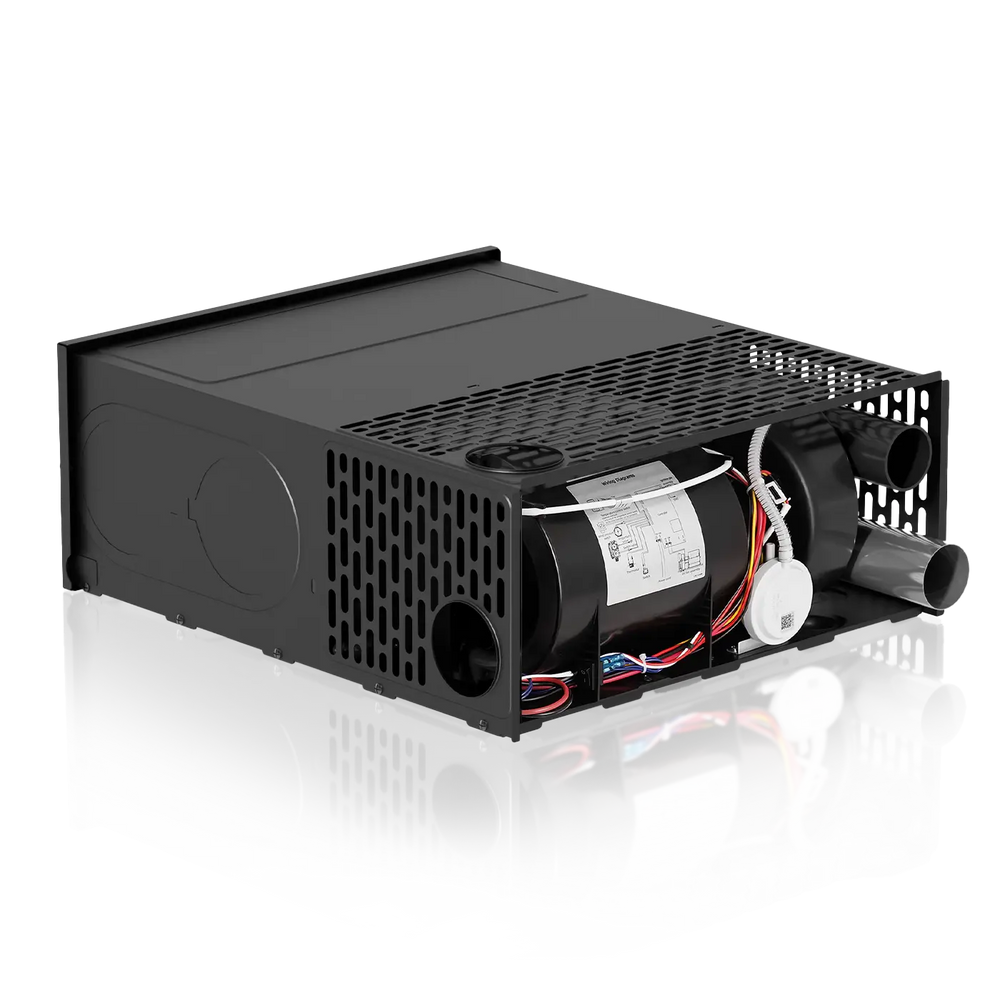
Fogatti, founded in 2003 and a trusted OEM supplier to Forest River, Gulf Stream, and other leading RV brands, designs its tankless units like the InstaShower 10L with accessible inlet and outlet fittings built for field serviceability. Accessible fittings make the diagnostic process significantly easier when you're working in a tight compartment.
The Definitive Fix: Installing an Expansion Tank on Your RV
If thermal expansion is driving your T&P valve to open during every heating cycle, the definitive solution is an expansion (accumulator) tank. Install it on the cold water line, downstream of the check valve and as close to the water heater inlet as practical. This gives expanding water a compressible air chamber to push into instead of forcing the T&P valve open.
This isn't just theory. An owner of a 2025 Flagstaff Super Lite confirmed on iRV2 that the leak was fully resolved after installing a larger expansion tank at the cold water low-point drain.
Pair the expansion tank with a quality water pressure regulator at the city water inlet, set to 40–50 PSI, to eliminate campground pressure spikes as a compounding factor.
Tank-style water heaters typically last 8–12 years before shell leaks become likely. Hard water accelerates anode depletion and scale buildup. Pairing an expansion tank with annual anode rod inspection extends heater life significantly and keeps T&P valve drips from returning.
Quick-Reference Field Diagnostic Checklist
Use this decision tree at the campsite to narrow your problem fast:
- Leak only on city water hookup → Check supply pressure with an inline gauge. Install a regulator set to 40–50 PSI before further diagnosis.
- Leak on pump too, drip from T&P discharge tube → Restore the air pocket using the procedure above. Replace the T&P valve if the drip continues.
- Leak at a specific fitting, appears only after heater warms up → Inspect for heat-induced expansion or a freeze-damage micro-crack. Replace the fitting.
- Hot water from cold tap, or cold-side fittings leaking → Test and replace the check valve.
- Tankless unit, water inside compartment → Inspect heat exchanger ports and inlet/outlet fittings at operating temperature.
A cost reminder: localized interior water damage repair runs $800–$3,500. Catching the leak at the fitting stage keeps your repair costs in the $180–$650 range.
Stop the Drip Before It Becomes a Disaster
A run-time-only leak is a pressure signal, and pressure problems are solvable. A gauge, an expansion tank, and correct fittings are all it takes.
The stakes are real. RV water damage repair costs range from $5,000 to $15,000 or more when structural damage is involved. Early diagnosis is the highest-ROI maintenance task you can do as an RV owner.
If you're considering upgrading to a tankless water heater, which eliminates tank corrosion and anode-related leak causes entirely, check out Fogatti's Help Me Choose advisor tool for personalized guidance on the right unit for your rig.
Have you tracked down a run-time leak on your own rig? Drop a comment below and share your fix with the Fogatti community. Your experience might save another RV owner from a soggy surprise.
Sources
- RV Water Damage Repair Cost — Boss Bros RV (2025)
- Safe RV Water Pressure at Campgrounds — Happy Campers World (2025)
- Brand New Water Heater Leaking? — EmergencyWaterHeaterSLC (2026)
- Leaking Pipes Around Hot Water Heater — Alliance RV Owners Forum (2025)
- RV Repair Cost Index 2025 — Happy Campers World
- Water Heater Leaking? Causes, Is It an Emergency, and What to Do — FastWaterHeater (2026)
- Water Heater Leak (2025 Flagstaff Super Lite) — iRV2 Forum
- How Common Is RV Water Damage? — ToolTroopers